
The Burden and the Glory: A Guide to Existentialism
existentialism-
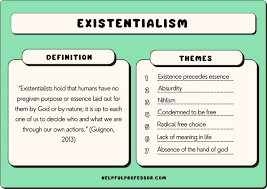
Have you ever felt it? That profound, unsettling sensation that life is a blank canvas and you are holding the brush? The dizzying freedom of choice, the crushing weight of responsibility, the quiet dread that maybe, just maybe, there is no grand script and you’re the one who has to write the story. If you’ve wrestled with these feelings, you’ve brushed up against the core of existentialism.
Existentialism is not a set of rigid doctrines but a philosophical movement that explores the fundamental questions of human existence. It’s a philosophy born from the turmoil of a world that seemed to have lost its divine and moral compass. While it’s often associated with angst and despair, at its heart, existentialism is an intensely humanistic philosophy that places the individual at the center of their own universe, empowering them to create meaning in a world that offers none. It is a call to live authentically, to embrace our radical freedom, and to take full responsibility for the lives we choose to live.
This is a deep dive into the essence of existentialism. We’ll explore its core ideas, meet the rebellious thinkers who shaped it, and discover how this seemingly bleak philosophy can be the key to living a truly meaningful life.
Part 1: The Revolutionary Idea
The most groundbreaking and often misunderstood concept in existentialism is summed up in Jean-Paul Sartre’s famous phrase: “Existence precedes essence.” To truly grasp this, let’s contrast it with the traditional view.
For most of history, philosophy and religion held the opposite view: Essence precedes existence. Think of a paper cutter. Its essence—its design, its purpose, its very blueprint—existed in the mind of its creator before it was ever made. The paper cutter exists to cut paper; it has a fixed nature and purpose. In this traditional view, human beings were also thought to have a pre-defined essence, a human nature, a purpose given by a creator, or by some cosmic order. We were born to fulfill a role, to be good, to follow a path.
Existentialism flips this on its head. It declares that for human beings, it is our existence—our being in the world—that comes first. We are born without a pre-defined nature, purpose, or identity. We are, as Sartre put it, “condemned to be free.” We are thrown into the world, and it is through our choices and actions that we create our own essence. We define ourselves moment by moment, decision by decision. We are not born good or evil, brave or cowardly; we become these things through the lives we live. This is the source of both our greatest burden and our greatest glory.
This radical freedom, however, comes with three profound emotional consequences:
- Anguish: The overwhelming feeling of responsibility that comes with realizing you are the sole author of your life. When you make a choice, you’re not just choosing for yourself; you are, in a way, choosing for all of humanity, setting an example for what a person should be. The realization of this immense responsibility is anguish. It’s the feeling of a profound, stomach-dropping sense of freedom.
- Forlornness: The realization that there is no God or external authority to justify our choices. We are alone in our freedom. There is no one to tell us what to do, no set of commandments to follow. This is not a state of pity, but of profound loneliness in the face of our autonomy.
- Despair: The recognition that we can only rely on our own actions. We can’t count on a grand plan or a benevolent force to help us achieve our goals. Despair is not about being sad; it’s about a sober recognition of the limits of our own power and the unpredictable nature of the world.
These emotions are not meant to paralyze us. Rather, for the existentialist, they are the necessary feelings that lead to authenticity—the state of living in full awareness of our freedom and responsibility, and making choices that are true to ourselves. The opposite of authenticity is “bad faith,” a term used by Sartre to describe when we deceive ourselves into believing we are not free. This is the person who says, “I have to do this,” or “I had no choice,” thereby avoiding the weight of their own decisions. Existentialism teaches us that we always have a choice, even if the only choice is how we respond to our circumstances.
Part 2: The Titans of Thought
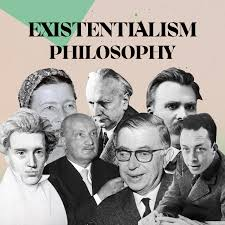
Existentialism is not a single, unified philosophy but a collection of diverse and often contradictory thinkers. Here are some of the most influential voices:
Søren Kierkegaard: The Individual and the Leap
Often called the “father of existentialism,” the 19th-century Danish philosopher Søren Kierkegaard rebelled against the detached, systematic philosophy of his time. He argued that truth is not objective and universal but deeply subjective and personal. For Kierkegaard, the most important question was not “What is truth?” but “What am I to do?” He introduced the idea of the individual’s desperate struggle to find meaning in a world devoid of it, a struggle that culminates in a “leap of faith” into the irrational, passionate commitment of belief in God. Kierkegaard’s profound focus on the individual’s journey and their subjective truth laid the groundwork for all future existentialist thought.
Friedrich Nietzsche: The Will to Power
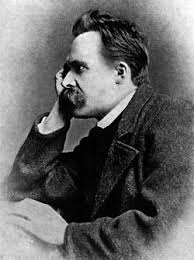
“God is dead.” With this famous declaration, Friedrich Nietzsche proclaimed the death of traditional morality and objective truth. He believed that with the decline of religious belief, humanity was left in a state of crisis, a moral vacuum. Instead of despairing, Nietzsche saw this as a radical opportunity. He challenged individuals to become the Übermensch (superman or overman)—a new kind of human being who creates their own values and meaning in a godless universe. The will to power, for Nietzsche, was not about dominating others but about mastering oneself, overcoming limitations, and striving for self-excellence. His philosophy is a powerful call to embrace life in its entirety and to forge one’s own destiny.
Jean-Paul Sartre: Condemned to Be Free
The most famous figure in existentialism, Jean-Paul Sartre, articulated its core principles with remarkable clarity. A central figure in the post-WWII Parisian intellectual scene, Sartre’s philosophy was shaped by the horrors of war and the absurdity of human suffering. In his masterwork, Being and Nothingness, he argues that humans are “condemned to be free.” He believed that we are defined by our actions and not by our intentions. For Sartre, there is no escape from freedom and its attendant responsibilities. To deny this freedom, to live in self-deception, is to live in bad faith—a form of inauthenticity that is the ultimate sin for an existentialist.
Albert Camus: The Absurd and the Rebel
Albert Camus, a French-Algerian philosopher and Nobel laureate, famously defined the absurd as the conflict between humanity’s search for meaning and the universe’s silent, meaningless indifference. He argued that there are only three responses to this absurd condition:
- Physical Suicide: A surrender to the meaninglessness, an admission that life is not worth living. Camus rejects this, calling it a cowardly act.
- Philosophical Suicide: The “leap of faith,” or adopting a belief system (like religion) to escape the absurd. Camus also rejects this as a form of intellectual escapism.
- Rebellion: The only authentic response. This is the act of living life to the fullest, in full awareness of its meaninglessness, and creating one’s own meaning in spite of it.

Camus’s most famous metaphor is Sisyphus, the mythical figure condemned to eternally push a boulder up a hill, only for it to roll back down. Camus argues that in the moment Sisyphus walks back down the hill, he is aware of his fate and can embrace it. By accepting the absurdity of his task, he finds defiance and freedom. As Camus famously concludes, “One must imagine Sisyphus happy.”
Simone de Beauvoir: The Second Sex
Sartre’s lifelong partner, Simone de Beauvoir, brilliantly applied existentialist principles to gender and feminist philosophy in her groundbreaking work, The Second Sex. Using the principle of “existentialism precedes essence,” she argued that “one is not born, but rather becomes, a woman.” She rejected the notion of a fixed, biological “feminine essence” and instead argued that gender is a social construct. Women, like all individuals, are free to create their own identities, and societal expectations and patriarchal structures often force them into a state of bad faith, limiting their freedom and authentic self-creation. Her work expanded existentialism’s scope, demonstrating its relevance to social justice and the struggles of marginalized groups.
Part 3: Existentialism in Modern Life and Pop Culture
Existentialist themes are more relevant than ever and have permeated modern culture, from films and literature to our everyday anxieties.
- The Search for Authenticity: In an age of social media, where curated personas and filtered realities are the norm, existentialism’s call for authenticity is a powerful counter-narrative. The pressure to conform and present an idealized version of ourselves can be seen as a form of bad faith, a denial of our true, un-curated existence.
- The Anguish of Choice: From career paths to relationship decisions, we are faced with an unprecedented number of choices. This abundance, a product of our modern freedom, can be a source of profound anguish. We are forced to define ourselves through our decisions, knowing that every choice closes a door to a million other possibilities.
- The Absurd in Art: Existentialist themes are abundant in popular culture. The movie Fight Club explores the absurd meaninglessness of a consumer-driven life and the search for authentic experience through rebellion. The Matrix is a classic exploration of freedom versus illusion, where the protagonist is given the ultimate existential choice: to live in a comfortable lie or embrace the harsh truth and responsibility of reality. TV shows like True Detective and Breaking Bad grapple with the bleakness of existence, the nature of morality, and the consequences of one’s choices.
Existentialism reminds us that our search for meaning isn’t a passive quest but an active, creative act. It’s about finding a purpose in a world that doesn’t inherently provide one.
Conclusion: Embrace the Burden, Find the Glory
At first glance, existentialism can seem bleak, even nihilistic. It strips away our comforting illusions and confronts us with a profound, terrifying freedom. It tells us that there is no grand plan, no purpose waiting to be discovered, and that we are ultimately alone in the task of living.
But this perspective is also incredibly liberating. It is a philosophy of action, a powerful antidote to a life lived passively. By embracing the anguish of our freedom, the despair of our aloneness, and the absurdity of our existence, we can stop waiting for life to happen to us and start living deliberately. We are the sole architects of our lives. There is no one to blame and no one to thank but ourselves.
This is the ultimate promise of existentialism: the journey to find meaning is not a predetermined path but a bold, courageous act of creation. It is a celebration of human potential and the power of the individual. So, go forth and be. Create your own essence. Define your own values. And in the face of the silent universe, find the strength and courage to live a life that is truly, defiantly, your own.
visit sitehttps://www.instagram.com/
Related Posts


The ethical implication of AI in healthcare
ai in healthcare": The Algorithmic Oath: Ethics and Responsibility in…