
The Condition of Minors in India: Challenges, Realities, and the Path Forward
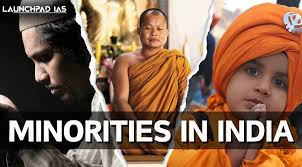
minorities in India –
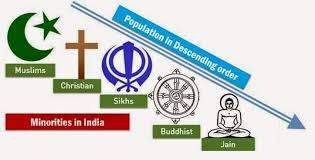
India is a country of some 1.4+ billion people, nearly 40% of whom are minors (under 18). Humanium While strides have been made in various areas—health, education, legal protections—many minors still face serious hardships. This article explores the condition of minors in India: what the problems are, what laws exist, how effective they are, recent trends, and what more needs to be done.
Who Are “Minors” in India
In India, “minor” usually means any individual under the age of 18. Many laws refer to minors in this way, especially in contexts like child protection, sexual offences, juvenile justice, child labour, etc. Legal definitions vary depending on the law in question, but broadly speaking, persons under 18 are accorded special protections under Indian law. UNICEF+1
Key Areas of Concern
Let’s look at the major issues affecting minorities in India, with data and insight into how they play out.
1. Malnutrition, Health, and Early Childhood
- Malnutrition/stunting: A large percentage of young children suffer from stunted growth due to chronic undernutrition. Humanium+1
- Infant mortality, child mortality: India still has a high number of deaths among children under 5, due to causes such as diarrhoeal diseases, pneumonia, poor sanitation, and lack of access to healthcare. Humanium+1
- Anemia and other nutritional deficiencies: For example, ~54% of adolescent girls and ~29% of boys are anemic. taranarain.org
- Healthcare access, rural vs urban divide: Many minorities in India rural/remote areas lack sufficient healthcare facilities. Delays, lack of awareness, financial constraints and infrastructure gaps are common obstacles. Humanium+1
2. Education and Learning Outcomes
- School attendance vs quality: The Right to Education Act ensures free and compulsory schooling between ages 6 and 14, yet many children are out of school or drop out early, especially among marginalized communities. British Safety Council India+2Ayoti Foundation – Hope for the Future+2
- Low learning outcomes: Even among those attending school, many do not achieve expected grade-level competencies. For example, many grade 3 children cannot read a grade 1 text. rustum.org
- Disparities by gender, region, socio-economic status: Girls, children from poorer families, rural areas, or minority/disadvantaged groups tend to fare worse. Ayoti Foundation – Hope for the Future+1
3. Child Labour and Exploitation
- Despite laws prohibiting child labour in many cases, millions of children are estimated to be engaged in labour—often hazardous, informal, or bonded labour. British Safety Council India+2Humanium+2
- States such as Bihar, Uttar Pradesh, Rajasthan, Madhya Pradesh and Maharashtra have high prevalence rates. British Safety Council India
- Many children combine work with schooling; some are pulled entirely out. arXiv+1
4. Abuse, Violence, and Exploitation
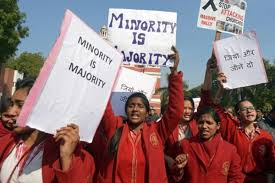
- Sexual abuse: A significant proportion of minorities in india report having experienced some form of sexual abuse. arpan.org.in+1
- Crimes against children: According to NCRB data, there were ~162,449 cases of crimes against minors in 2022, up from ~149,404 in 2021. Legal Service India
- Child trafficking: Children are trafficked for labour, begging, sexual exploitation, or illegal adoption. Drishti IAS+1
- Child marriage: Though legally prohibited, child marriages persist, especially in rural and poorer areas. They severely impact minors (especially girls) in terms of education, health, autonomy, and rights. taranarain.org
5. Protection, Law, and Policy
India has enacted numerous laws to protect minors:
- Child Labour (Prohibition & Regulation) Act, 1986 (amended 2016) – prohibits employment of children below 14, regulates adolescent work. British Safety Council India+1
- Right of Children to Free and Compulsory Education Act, 2009 – guarantees free and compulsory education for children aged 6 to 14. British Safety Council India+1
- Juvenile Justice (Care and Protection) Act, Protection of Children from Sexual Offences (POCSO) Act, and Prohibition of Child Marriage Act are among other critical legal safeguards. UNICEF+1
There are also government programmes and schemes, such as the National Child Labour Projects (NCLP) which provide education, vocational training, healthcare, stipend etc for rescued child labourers. Wikipedia
Underlying Causes
To understand the condition of minorities in India . we must look at what perpetuates these problems.
- Poverty
Poverty is the most persistent and foundational cause. Families under financial stress often see child labor or child marriage as a survival strategy. minorities in india. - Lack of Infrastructure and Access
In rural areas or slums, basic services—schools, healthcare, water/sanitation—are often under-resourced or inaccessible. - Socio-Cultural Norms
Gender bias, caste or tribal marginalization, patriarchal norms, and traditions like early marriage affect minorities in India ’ rights. Sometimes child labor is socially accepted in certain communities. - Legal Gaps and Weak Enforcement
Though laws exist, enforcement is weak in many places due to lack of monitoring, corruption, lack of awareness, or low capacity of legal institutions. - Awareness and Societal Attitudes
Many people may not be aware of children’s rights( minorities in india), or accept certain violations (such as corporal punishment or child marriage) as normal. - Economic Inequality & Migration
Migrant families, marginal farmers, landless labourers are especially vulnerable. Their children often miss out on education or become part of labour or exploitation networks. arXiv - Environmental & Health Shocks
Natural disasters, climate change, epidemics (like COVID-19), droughts etc., disproportionately affect minors.
Recent Trends & Data
- According to Realizing Children’s Rights in India, there are ~472 million children under 18 in India, with ~29% between ages 0–6. Humanium
- The parliamentary committee has observed that India is unlikely to meet its SDG commitments (for example eliminating child labour) by 2025. British Safety Council India
- Crimes against minors have been increasing: 2022 saw ~162,449 cases. Legal Service India
- Child labour remains pervasive in many states. British Safety Council India+1
- Education during/after COVID: Learning losses, dropouts, difficulty accessing online classes, etc., have worsened inequality. For example, in a project by CRY across 4 states, many children lagged significantly post-COVID. arXiv
Gaps & Challenges in Protections
- Enforcement & Monitoring
- Laws like the Child Labour Act are not always effectively enforced. Inspections are few; many violations go unreported. British Safety Council India+1
- Police, administrative machinery often constrained; sometimes awareness is low.
- Ambiguous or Overlapping Definitions
- Different laws sometimes define “child” differently. For example, the age definitions in Child Labour laws vs Right to Education vs other acts may not align cleanly. British Safety Council India
- Socio-economic and Geographic Disparities
- Rural vs urban: children in rural or remote areas have less access to quality education, healthcare.
- Gender, caste, tribal status further compound disadvantages.
- Insufficient Funding & Resources
- Government schemes sometimes underfunded or not reaching the most vulnerable.
- Anganwadi centres, health services, mid‑day meals etc., though present, often have gaps regarding quality, regularity, infrastructure.
- Stigmatization and Social Attitudes
- Some forms of abuse or exploitation are underreported due to social stigma.
- Child marriage, gender discrimination and patriarchal attitudes persist.
- Impact of Disasters, Pandemics, Environmental Crisis
- COVID‑19 showed how vulnerable the educational system is when schools close or shift to online modes; many children lost learning time.
- Environmental risks (pollution, heat, floods) also disproportionately affect minors. Drishti IAS
Successes, Progress, and Positive Developments
Even with the challenges, there are positive signs and achievements worth noting.
- Legal framework: Strong laws and policies exist, many being strengthened (e.g. amendments to Child Labour Act in 2016). UNICEF+1
- Programmes: NCLP successfully rehabilitates many child labourers. Wikipedia
- Civil society and NGO action: Organisations like Bachpan Bachao Andolan play key roles in rescuing children, raising awareness, pushing for policy change. Wikipedia
- Increased attention to data, monitoring, and rights‑based approaches: more studies, reports, media coverage bringing visibility to the issues.
What More Needs to Be Done
To improve the condition of minorities in India and ensure children can grow, learn, and live with dignity, a multi‑pronged, sustained approach is required. Here are suggestions:
- Strengthen Enforcement and Oversight
- Ensure law enforcement, labour inspectors, child protection officers are well‑resourced and trusted.
- Simplify and standardize definitions across laws (age of child, hazardous work etc.).
- Accountability for non‑action: e.g. ensuring FIRs are filed for child labour offences, and officials held responsible if they don’t enforce laws.
- Increase Investment in Early Childhood Health & Nutrition
- More/stronger Anganwadi centres, immunisation, nutrition programmes.
- Better infrastructure in rural/remote areas.
- Address anemia and other micronutrient deficiencies formally via public health policies.
- Improve Access & Quality of Education
- Ensure free schooling is not only available but effective: teacher training, better curricular support, remedial education to compensate for lagging children.
- Strengthen mid‑day meals, sanitation, safe school infrastructure.
- Use technology wisely to bridge gaps, particularly in remote areas.
- Target Economic Support & Poverty Alleviation
- Financial assistance to vulnerable families, social protection schemes to reduce the pressure to send children into work.
- Vocational training for adolescents as alternatives.
- Income generation, credit access for poorer households.
- Change Social Attitudes & Increase Awareness
- Campaigns to end child marriage, break gender stereotyping.
- Promote rights awareness among parents, communities.
- Schools and media can play strong roles.
- Special Focus on Vulnerable Groups
- Scheduled Castes, Scheduled Tribes, minorities in india , migrants, street children.
- Girls especially: protect from early marriage, gender‑based violence, enforce right to education.
- Emergency Preparedness & Resilience
- Policies to protect minorities in India in crises: pandemics, climate disasters, migration shocks.
- Systems to maintain learning continuity (e.g., remote learning) without excluding disadvantaged children.
- Better Data, Monitoring, and Research
- More disaggregated data (by age, gender, location, social status) to identify where gaps are largest.
- Regular assessments of learning, health, protection outcomes.
- Research-driven policy making.
Case Study / Illustrative Examples
To ground the above in some real scenarios:
- In Ludhiana, Punjab, recent studies show child labour is “rampant” due to poverty and migration. Closure of National Child Labour Project centres worsened the situation, and school enrolment in some areas dropped sharply. The Times of India
- In Nagpur, minorities in India aged 15‑17 were rescued from a construction site; these were trafficked from other states. Indicates prevalence of both child labor and trafficking. The Times of India
- Recent efforts in Karnataka mandated child protection policy in residential schools and hostels to prevent abuse. The Times of India
Legal and Policy Framework: Key Laws & Provisions
Here’s a summary of the legal protections for minorities in india, and how they are supposed to work:
| Law / Act | Key Provisions | Gaps or Issues |
|---|---|---|
| Child Labour (Prohibition & Regulation) Act, 1986 (amended 2016) | Prohibits employment of children under 14; regulates adolescent work; bans hazardous work for younger adolescents. UNICEF+2British Safety Council India+2 | Enforcement lacking; poverty leads to violations; ambiguity in definition; many violations are informal or hidden. |
| Right of Children to Free & Compulsory Education Act, 2009 | Guarantees free primary education (6‑14 years); aims universal school enrollment. British Safety Council India+1 | Quality issues; dropout; learning loss; regional inequities. |
| Protection of Children from Sexual Offences (POCSO) Act, 2012 | Protection from sexual abuse, assault; mandates child‑friendly courts, etc. UNICEF+2Legal Service India+2 | Low reporting; social stigma; delays; lack of awareness. |
| Juvenile Justice (Care & Protection) Act | Rights of children in conflict with law and those in need of care/protection; rehabilitation, foster care, etc. UNICEF | Implementation challenges; gaps in foster/adoption systems; resource limitations. |
| Prohibition of Child Marriage Act, 2006 | Legally prohibits marriage under certain ages; penalties for violations. UNICEF+1 | Practice still persists; enforcement especially lacking in rural areas. |
What Must Change: A Roadmap
Putting together everything above, here is a potential roadmap to improve the condition of minorities in India over the next decade:
- Holistic Policy Planning
Policies need to be integrated: health + nutrition + education + protection must be planned together rather than in silos. - Community Engagement
Local stakeholders—parents, community leaders, teachers—must be engaged. Awareness campaigns, local monitoring groups, child protection committees can help. - Strengthened Institutions
Empower Child Welfare Committees, District Child Protection Units, Juvenile Justice Boards with training, monitoring, adequate staffing and resources. - Social Safety Nets
Expand schemes providing unconditional cash transfers or conditional ones (linked to children’s schooling, health check‑ups etc.), especially for the poorest families. - Innovative Education Delivery
Use technology, bridge programmes, mobile / low‑cost schooling, non‑formal education to reach children who are out of mainstream schools. Post‑COVID learning recovery required. - Tougher Action with Accountability
Make it easier to report violations (labour, abuse, trafficking); ensure timely investigation and punishment. Transparency in outcomes. - Targeted Support for Girls
Given the gender‑related deviations – early marriage, dropouts, health issues – specific programmes for girls’ education, protection, empowerment are essential. - Disaster / Crisis Response
Ensure that children do not lose rights when systems are disrupted—pandemic, climate shocks etc. - Data & Monitoring
Improved data collection, regular national surveys; ensuring disaggregated data for region, gender, caste, social group etc.; evaluation of interventions.
Conclusion
The condition of minorities in India is a mixed picture. On the one hand, the country has strong legal protections, ambitious policy programmes, and many actors—governmental and non‑governmental—working to improve things. On the other hand, many minors still suffer from preventable hardships: malnutrition, lack of education, abuse, child labour, and social exclusion.
To truly improve the lives of children and minorities in india, interventions must go beyond just having laws on paper. Enforcement, awareness, funding, systemic equity, and socio‐cultural change are crucial. Every child deserves not just survival, but a chance to thrive: good health, education, safety, dignity.
visit sitehttps://www.instagram.com/
Related Posts


The concept of transhumanism and its moral and its moral argument
Transhumanism- Transhumanism is a philosophical and intellectual movement that advocates…

The ethical implication of AI in healthcare
ai in healthcare": The Algorithmic Oath: Ethics and Responsibility in…