
The Great Paradox: Unpacking the Engine of Modernity
monopoly-
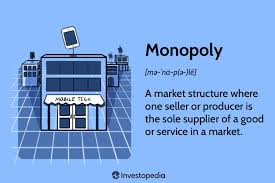
Understanding Monopolies in Business and Economics
Monopolies have long been a topic of intense debate in economics, business, and public policy. They occupy a unique space in markets, influencing prices, competition, and innovation. Simply put, a monopoly exists when a single company or entity controls a significant portion—or the entirety—of a market for a particular product or service. Unlike competitive markets, where multiple businesses compete for consumers, a monopoly can dictate pricing, limit consumer choice, and shape the market landscape to its advantage.
The Formation of Monopoly
Monopoly can arise through various channels. Sometimes, they occur naturally: when a company’s technology, efficiency, or innovation is so superior that it outcompetes all rivals, it effectively dominates the market. For example, in the early 20th century, Standard Oil, led by John D. Rockefeller, achieved a near-total control of the U.S. oil industry by acquiring competitors and leveraging operational efficiencies.
Other monopolies are created artificially through government regulation or legal frameworks. Patents and copyrights, for instance, grant companies temporary monopolies over intellectual property. Pharmaceutical companies, for example, may hold exclusive rights to produce a new drug for several years, enabling them to recoup research costs before competitors enter the market.
Mergers and acquisitions also contribute to monopoly formation. Large companies sometimes absorb smaller competitors, consolidating market power. While this can lead to economies of scale and efficiency gains, it can also reduce competition, resulting in higher prices and fewer choices for consumers.
Economic Implications of Monopolies
Monopolies have both positive and negative effects on the economy. On the positive side, monopolies can lead to economies of scale, meaning they produce goods more efficiently than smaller firms. This can lower production costs and, in some cases, reduce prices for consumers if the efficiency gains are passed on. Additionally, monopolies may have the resources to invest heavily in research and development, spurring innovation in ways smaller firms cannot match.
However, the downsides of monopolies often outweigh the benefits. Without competition, monopolies may set prices artificially high, reduce output, and limit choices for consumers. This phenomenon is known as “market power.” Furthermore, monopolistic firms may lack incentives to innovate or improve products, leading to stagnation. Economists describe this as the “deadweight loss” of monopoly: resources are not allocated efficiently, resulting in economic welfare loss to society.
Types of Monopolies
Monopolies are not all created equal. Economists categorize them into several types:
- Natural Monopolies: These occur when a single firm can supply the entire market at a lower cost than multiple competing firms. Utilities such as water, electricity, and gas often fall into this category because the infrastructure costs are so high that duplication by competitors would be inefficient.
- Government Monopolies: Sometimes governments grant exclusive rights to a single provider, often for strategic reasons. Postal services or national defense contractors are common examples.
- Technological Monopolies: Firms that control a breakthrough technology can dominate a market. For example, tech giants often gain temporary monopolies through innovation and proprietary platforms.
- Geographic Monopolies: In some areas, a single business might dominate due to geographic isolation or lack of nearby competition. For instance, a single supermarket chain in a remote town may function as a local monopoly.

Monopolies vs. Capitalism
Capitalism, in its purest form, thrives on competition. Free markets are characterized by multiple firms striving for consumer attention, driving efficiency, innovation, and fair pricing. Monopolies, however, represent a deviation from this ideal. While they may emerge within capitalist economies, they often require regulation to ensure they do not exploit their market power. Antitrust laws, for instance, were developed in the United States to prevent monopolistic practices and preserve competition.
In short, capitalism encourages competition, choice, and market-driven innovation, whereas monopolies concentrate power, potentially undermining these principles. A balanced economy requires vigilance to prevent monopolies from stifling the dynamism that capitalism fosters.
Regulatory Measures Against Monopolies
Governments around the world implement a variety of measures to control monopolistic behavior. In the U.S., the Sherman Antitrust Act of 1890 was the first significant law aimed at breaking up monopolies and preventing anti-competitive practices. Later, the Clayton Act and the Federal Trade Commission Act strengthened regulatory oversight.
Globally, competition authorities, such as the European Commission’s Directorate-General for Competition, enforce laws that prevent mergers likely to reduce competition, prohibit price-fixing, and penalize companies that abuse market dominance. These measures aim to protect consumers, encourage innovation, and maintain economic fairness.
Case Studies: Monopolies in Action
Standard Oil
Standard Oil exemplifies a monopoly formed through aggressive business practices. By the early 20th century, it controlled over 90% of U.S. oil production. Its dominance led to antitrust intervention, resulting in the company’s breakup into smaller entities, some of which eventually became major players like ExxonMobil and Chevron.

Microsoft
In the late 1990s, Microsoft faced legal scrutiny for allegedly using its Windows operating system to monopolize the PC software market. While the company’s innovations were significant, its bundling practices were seen as anti-competitive. Legal battles ensued, demonstrating the fine line between success in a capitalist market and monopolistic overreach.
Amazon
In modern times, Amazon illustrates how technology and logistics can enable near-monopolistic dominance in e-commerce. While it has lowered prices and improved convenience for consumers, concerns persist about its control over the marketplace, treatment of third-party sellers, and influence on pricing strategies.
The Global Perspective
Monopolies are not limited to any single country. In China, state-owned enterprises dominate sectors such as energy, telecommunications, and banking, creating monopolistic or oligopolistic conditions. In contrast, India has historically faced challenges with monopoly control in industries like telecommunications, prompting regulatory reforms to encourage competition. Understanding monopolies globally requires considering political, cultural, and economic contexts.
The Future of Monopolies
As technology advances, new forms of monopoly may emerge. Digital platforms, artificial intelligence, and big data allow companies to gather unprecedented amounts of information and exert control over markets. Governments and economists are now exploring how to regulate these tech giants to prevent monopolistic abuses while still fostering innovation.

The rise of platform-based monopolies—where a single company connects users and services on a massive scale—poses unique challenges. Traditional antitrust frameworks may not fully address the nuances of digital monopolies, requiring updated laws and innovative regulatory approaches.
Conclusion
Monopolies remain a double-edged sword in economics and business. On one hand, they can drive efficiency, innovation, and economies of scale. On the other, they risk stifling competition, raising prices, and reducing consumer choice. Effective regulation, careful policy design, and vigilant enforcement are essential to balance the benefits and drawbacks of monopolistic power.
Ultimately, capitalism thrives on competition, but the natural tendencies of successful businesses sometimes push them toward monopoly. Understanding this tension is key to building economic systems that foster innovation while protecting consumers and society at large.
visit sitehttps://www.instagram.com/
Related Posts


blockchain beyond cryptocurrency
he Invisible Ledger: A 2000-Word Journey Beyond Cryptocurrency cryptocurrency- For…
