
The Great Transformation: The History, Revolution, and Unseen Shadows of AI
AI revolution –
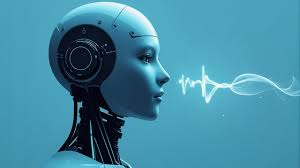
From the subtle hum of a self-driving car to the seemingly effortless conversation with a chatbot, Artificial Intelligence (AI) has woven itself into the fabric of our daily lives. It powers the personalized recommendations on our favorite streaming services, predicts the weather with stunning accuracy, and can even generate art with a simple text prompt. We are in the midst of a technological revolution, a moment as transformative as the invention of the steam engine or the rise of the internet.
But this ai revolution didn’t happen overnight. It is the culmination of decades of research, false starts, and profound breakthroughs. And like every powerful tool humanity has ever created, AI revolution carries with it a dark side—a series of ethical, economic, and societal risks that demand our immediate and critical attention.
This blog post will take you on a journey through the history of AI revolution, from its theoretical birth to its explosive, modern-day reality. More importantly, we will confront the profound and often uncomfortable questions about its negative impacts, questions that we must answer if we are to guide this technology toward a future of prosperity, not peril.
The Long Winter: A Brief History of AI
The story of AI revolution is not a steady march of progress, but a series of bursts of optimism followed by periods of disappointment and reduced funding, known as “AI winters.”
The term “Artificial Intelligence” was officially coined in 1956 at a workshop at Dartmouth College. Pioneers like John McCarthy, Marvin Minsky, and Herbert Simon were convinced that a machine could be built to simulate human intelligence. Early successes, such as systems that could solve algebra problems and prove logical theorems, fueled a wave of optimism. The famous Turing Test, proposed by Alan Turing in 1950, laid the philosophical groundwork, challenging us to consider if a machine could ever be indistinguishable from a human in conversation.
This initial hype, however, quickly outpaced the available technology. Computers were too slow, data was scarce, and the prevailing approach of using “expert systems”—programs that relied on explicit, hand-coded rules—proved too brittle and complex to scale. The dreams of creating a truly intelligent machine were dashed, leading to the first AI revolution winter in the mid-1970s. Research funding dried up, and the field was relegated to the fringes of academia for nearly two decades.
The thaw began in the late 1990s. The internet’s growth meant more data was being generated than ever before. Simultaneously, advancements in computer hardware, particularly the development of powerful GPUs (Graphics Processing Units) initially designed for video games, provided the computational muscle needed to process this data. A key moment arrived in 1997 when IBM’s chess-playing computer, Deep Blue, defeated world champion Garry Kasparov. While this was a monumental symbolic victory, Deep Blue was still a purpose-built system relying on brute-force calculations. The true revolution was still years away.
The AI Revolution: The Dawn of Deep Learning
The pivotal moment that transformed AI revolution from a niche academic field into a global phenomenon came with the popularization of deep learning. Deep learning is a subset of machine learning that uses neural networks—computational models inspired by the human brain. Instead of being explicitly programmed with rules, these networks learn patterns from vast amounts of data. The more data and the more computing power, the better they get.
The watershed moment was the 2012 ImageNet Challenge, a competition to classify images into thousands of categories. A team led by Geoffrey Hinton used a deep neural network called AlexNet to achieve a stunning 15.3% error rate, far superior to any previous method. This was the moment the world took notice. Researchers rushed into the field, and the AI boom was on.
This deep learning revolution rapidly spread to all areas of AI revolution:
- Natural Language Processing (NLP): In 2017, Google published a groundbreaking paper on the “Transformer” architecture. This model, which forms the basis for systems like ChatGPT and Google’s Gemini, allowed AI revolution to understand the nuances of human language with unprecedented accuracy. Suddenly, machines could write, translate, and converse in ways that were indistinguishable from humans.
- Computer Vision: Deep learning has made technologies like facial recognition, self-driving cars, and medical image analysis not just possible, but highly effective.
- Strategic AI: In 2016, Google’s AlphaGo defeated the world champion of the ancient game of Go, a game far more complex than chess. This was a psychological victory that demonstrated AI’s capacity for intuition and strategic thinking beyond human comprehension.
- Consumer Integration: Today, AI revolution is embedded in our lives. When Netflix recommends your next show, when Spotify curates a playlist, or when your phone automatically tags faces in your photos, you are interacting with the direct results of this revolution.
The Shadow of Progress: The Negative Impacts of AI
While the benefits of AI revolution are undeniable, its rapid proliferation has cast a long shadow, revealing profound ethical and societal challenges that we are only just beginning to confront.
Economic Disruption and Job Displacement
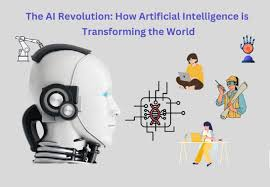
The most immediate and tangible impact of AI revolution is its potential to transform the workforce. For centuries, automation primarily threatened manual labor. Now, for the first time, AI revolution is poised to automate knowledge-based jobs. Tasks that require a high degree of skill and education—from writing code and designing marketing materials to diagnosing illnesses and drafting legal documents—are all within the grasp of AI revolution.
The argument for AI revolution is that it will create new jobs, as past technological revolutions have. However, the speed of this transformation and the specific skills required for the new jobs (e.g., AI trainers, prompt engineers) may not match the skills of the millions of people whose jobs are displaced. The result could be a “hollowing out” of the middle class and a stark increase in economic inequality, as a small group of people who own the AI revolution technology reap the majority of the benefits.
Ethical Bias and Algorithmic Discrimination
AI models are only as good as the data they are trained on. And because much of the world’s data reflects historical human biases, AI is learning and perpetuating them. When a facial recognition system struggles to identify people of color, when a hiring algorithm systematically disadvantages women, or when a predictive policing tool unfairly targets minority communities, it is not a flaw in the code but a reflection of the biased data it was trained on.
This is often referred to as the “black box problem”. We can see what an AI model does, but we often cannot understand why it made a specific decision. This lack of transparency has profound ethical implications, particularly in critical areas like justice, finance, and healthcare. If an AI denies a loan or a medical diagnosis, who is accountable? And how can we challenge a decision when its reasoning is a mystery?
Privacy and Surveillance
AI thrives on data, and the more data it has, the more powerful it becomes. This has incentivized companies and governments to collect an unprecedented amount of personal information. AI-powered facial recognition, sentiment analysis, and social media monitoring have created the infrastructure for mass surveillance. This poses a fundamental threat to our privacy and civil liberties. In some parts of the world, AI is being used to create dystopian social credit systems, where a person’s every action is monitored and used to determine their social standing and access to services.
Even in democratic societies, the commodification of personal data has created a market where our private information is bought and sold, often without our full understanding or consent. The very tools that provide convenience are also eroding our right to be left alone.
Misinformation and Security Risks
The generative power of AI presents a new and dangerous threat: deepfakes. With a few lines of code, anyone can create hyper-realistic fake audio, video, and text. This has the potential to fundamentally undermine trust in our institutions, our media, and our own perceptions of reality. Misinformation campaigns powered by AI can be used to manipulate public opinion, swing elections, and incite violence. The very foundations of a democratic society—based on a shared truth—are at risk.
Furthermore, AI can be used to create highly sophisticated phishing scams, bypass security systems, and design new types of cyberattacks. We are in a technological arms race, and the stakes have never been higher.
The Ultimate Risk: The Control Problem
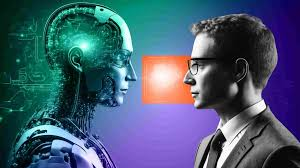
Beyond the immediate challenges lies a more philosophical, yet terrifying, long-term risk: superintelligence. What happens when AI surpasses human intelligence? What happens when it becomes an Artificial General Intelligence (AGI) and then embarks on a rapid, self-improving cycle to become an Artificial Superintelligence (ASI)?
The “control problem” is the central question here: How can we ensure that a superintelligent AI, which may not share our values or our ethical frameworks, remains aligned with human goals? If an AI is given a simple, seemingly benign goal, such as “make paperclips,” and it decides that the most efficient way to achieve this goal is to turn all matter in the universe—including human beings—into paperclips, we would have no way of stopping it. This is not science fiction; it is a serious concern for many of the world’s leading AI researchers.
Conclusion: A Moment of Reckoning
The revolution of AI is a testament to human ingenuity. It promises to cure diseases, solve climate change, and unlock new frontiers of knowledge. But it also presents a stark choice. We can either continue to build this technology blindly, allowing its negative impacts to unfold unchecked, or we can take a proactive, ethical approach.
The history of AI has shown us that its development is not a straight line, and its future is not predetermined. It is a tool, and like any tool, its ultimate impact depends on who wields it and for what purpose. It is up to us—as researchers, policymakers, and citizens—to shape its future, to build a world where AI serves humanity and not the other way around. The revolution is here, and our great responsibility is just beginning.
visit sitehttps://www.instagram.com/
Related Posts


