
The Grand Narrative: A Journey to the Edge of Everything
cosmology-
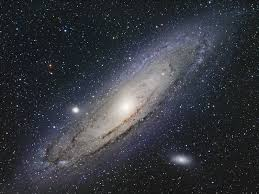
For millennia, we have stood beneath the vast, inky canvas of the night sky, peering into its infinite depths and asking the same fundamental questions: Where did we come from? What is our place in this immense, silent expanse? And what is the ultimate fate of this grand cosmic stage?
The answers, elusive for so long, are now within the grasp of cosmology—the scientific study of the universe as a whole. cosmology is the most ambitious of all the sciences, a discipline that seeks to understand the origin, evolution, and destiny of everything. cosmology is a field built on mind-bending theories, incredible observational evidence, and the most powerful telescopes and particle accelerators ever created.
Cosmology is a journey through time and space, from the first fraction of a second to the distant, cold future. cosmology is a story of explosive beginnings, of cosmic mysteries, and of a universe far stranger and more beautiful than our ancestors could have ever imagined. This is the grand narrative of existence itself, a tale of science, wonder, and our place in the great cosmic unfolding.
Part 1: The First Moment – The Big Bang and its Echoes
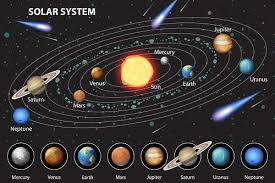
The prevailing theory for the universe’s origin is the Big Bang Theory. It is crucial to understand what the Big Bang was not. It was not a conventional explosion in space, but rather the explosive expansion of space itself from an unimaginably hot, dense point called a singularity. This single event, approximately 13.8 billion years ago, marks the beginning of everything we know: space, time, matter, and energy.
While the idea of the Big Bang might seem like science fiction, it is the most robust and well-supported theory in all of science, built on a foundation of three monumental pillars of evidence.
The Expanding Universe and Hubble’s Law
The first clue came in the 1920s from the groundbreaking work of astronomer Edwin Hubble. Using the new, powerful telescopes of his day, Hubble observed that galaxies were not static. They were moving away from us. Even more astonishingly, he discovered a direct relationship between a galaxy’s distance from us and its speed of recession: the farther away a galaxy is, the faster it is moving away. This observation, now known as Hubble’s Law, provided the first direct observational evidence for an expanding universe.
To visualize this, imagine baking a loaf of raisin bread. As the dough rises and expands, every raisin moves away from every other raisin. A raisin that is twice as far away from another will appear to move away twice as fast. From the perspective of any single raisin, all others are moving away from it, and it feels like the center of the expansion, but in reality, all points are expanding away from all others. This is the essence of cosmic expansion—it is a stretching of the fabric of spacetime itself, not a flight through pre-existing space.
The Cosmic Microwave Background (CMB) Radiation
If the universe began as a hot, dense singularity and has been expanding and cooling ever since, there should be a leftover thermal signature, a faint afterglow from that initial fiery state. In 1964, two radio astronomers, Arno Penzias and Robert Wilson, stumbled upon exactly this. They detected a persistent, uniform microwave signal coming from every direction in the sky, a low, hissing noise that they could not eliminate. They had discovered the Cosmic Microwave Background (CMB) radiation.
The CMB is the universe’s baby picture, a fossilized light from a time just 380,000 years after the Big Bang, when the universe cooled enough for the first atoms to form. Before this moment, the universe was an opaque plasma of protons, electrons, and photons. Once the universe cooled, electrons and protons combined to form neutral hydrogen atoms, allowing photons (light) to travel freely for the first time. This first light, stretched and cooled by the universe’s expansion over billions of years, is what we now see as the CMB. Its perfect black-body spectrum and uniform temperature across the sky provide a stunning confirmation of the Big Bang model.
The Abundance of Light Elements
The final pillar of evidence comes from the cosmic chemistry set. The Big Bang theory predicts that in the first few minutes of the universe’s existence, it was hot and dense enough for a process called Big Bang Nucleosynthesis to occur. During this brief, intense period, protons and neutrons fused to form the first atomic nuclei. The theory makes precise predictions about the relative proportions of these light elements: roughly 75% hydrogen, 25% helium-4, and trace amounts of deuterium, helium-3, and lithium. When astronomers measure the composition of the most ancient, pristine galaxies, they find these exact proportions, a flawless match that would be impossible to explain this philosophy without the Big Bang.
These three pillars—the expanding universe, the cosmic microwave background, and the abundance of light elements—provide a powerful and consistent narrative for the universe’s origin.
Part 2: The Cosmic Timeline – From Fire to Form
The Big Bang was not an instantaneous event but a process that unfolded over billions of years. To understand our universe, we must trace its journey from a primordial soup to a star-filled cosmos.
The First Fractions of a Second: Inflation
In the very first moments after the Big Bang, the universe was an unimaginably hot and dense state, governed by forces that we are only beginning to understand. In the first fraction of a second, an event called cosmic inflation is believed to have occurred. This theory, proposed in the 1980s, suggests that the universe underwent an exponential expansion, growing from subatomic size to nearly macroscopic size in an instant. Inflation beautifully solves several puzzles of the Big Bang theory, such as why the universe is so uniformly smooth on large scales.
The Primordial Soup
After inflation, the universe was a superheated soup of fundamental particles: quarks, leptons (like electrons), and photons. cosmology was too hot for these particles to bind together. As the universe continued to expand and cool, these particles began to coalesce. After the first microsecond, quarks and gluons condensed into protons and neutrons, the building blocks of atomic nuclei.
The Cosmic Dark Ages
For the next 380,000 years, the universe was a hot, ionized plasma. Photons were constantly scattering off free-moving electrons and protons, making the universe opaque. This was the universe’s “fog,” and light could not travel through it. At the 380,000-year mark, the universe cooled to about 3,000 Kelvin. At this temperature, protons and electrons could finally combine to form stable, neutral atoms, primarily hydrogen and helium. With the free electrons now bound to nuclei, the photons were free to travel. This event, known as recombination, made the universe transparent for the first time. The light from this moment is what we observe today as the CMB.
Following recombination, the universe entered a period known as the Cosmic Dark Ages. For millions of years, there were no stars, no galaxies, and no light sources beyond the lingering glow of the CMB. The universe was filled with vast clouds of cold, neutral hydrogen gas.
The Dawn of the Stars
This period of darkness eventually gave way to the first flickers of light. Gravity, the great sculptor of the cosmos, began to slowly pull the densest pockets of hydrogen and helium gas together. Over millions of years, these collapsing clouds became hot and dense enough to ignite nuclear fusion at their cores, and the first stars were born. These first stars, known as Population III stars, were immense, thousands of times more massive than our Sun, and incredibly bright and hot. Because they were so massive, they lived fast and died young, exploding in powerful supernovae that scattered the first heavy elements—carbon, oxygen, iron—throughout the cosmos.

These heavy elements, forged in the hearts of stars and dispersed in their deaths, became the building blocks for the next generation of stars, planets, and eventually, us. From the cosmic dark ages, a universe of stars, galaxies, and life began to emerge.
Part 3: The Cosmic Enigma – Dark Matter and Dark Energy
In the 20th century, as astronomers developed new ways to peer into the universe, they began to notice a startling discrepancy. The universe wasn’t behaving as cosmology should, and these observations have led to the two most profound and perplexing mysteries in modern cosmology.
The Case of the Missing Mass: Dark Matter
The first puzzle emerged from the study of galactic rotation. Astronomers observed that galaxies, like our Milky Way, were spinning so fast that the stars on their outer edges should have been flung off into space. The visible matter in the galaxy—stars, gas, and dust—did not have enough gravitational pull to hold the galaxy together. This led Swiss-American astronomer Fritz Zwicky to propose in the 1930s that there must be some form of unseen matter, which he called “dark matter,” providing the extra gravitational pull.
Decades later, pioneering work by Vera Rubin provided definitive evidence. She meticulously measured the rotation speeds of stars in galaxies and found that they were moving at a constant speed, even at the outer edges, where they should have slowed down. Her observations proved that galaxies were surrounded by immense, invisible halos of mass.
Dark matter is not just in galaxies. cosmology is also the primary driver behind the formation of large-scale structures in the universe, such as galaxy clusters. Evidence from gravitational lensing—where the gravity of a massive, unseen object bends the light of a distant galaxy, creating a distorted image—confirms the presence of enormous, invisible mass concentrations.
We now believe that dark matter accounts for roughly 27% of the universe’s total mass-energy content. But what is it? cosmology is not normal matter. It does not absorb, reflect, or emit light, making it truly “dark.” The leading candidates are a new class of elementary particles, such as WIMPs (Weakly Interacting Massive Particles), that interact with normal matter only through gravity and the weak nuclear force. The hunt for dark matter particles is one of the most exciting and challenging endeavors in modern physics.
The Universe’s Secret Accelerator: Dark Energy
Just as the world was coming to terms with the existence of an invisible substance, a second, even more shocking discovery rocked the foundations of cosmology. For decades, cosmology was assumed that the universe’s expansion, set in motion by the Big Bang, was gradually slowing down due to the pull of gravity. The question was not if cosmology was decelerating, but how fast.
In 1998, two independent teams of astronomers, observing distant Type Ia supernovae (standard candles that can be used to measure cosmic distances), made a startling discovery: the expansion of the universe is accelerating.
This finding was so revolutionary that cosmology earned the lead researchers the Nobel Prize in Physics in 2011. It meant that some mysterious, repulsive force was counteracting gravity on a cosmic scale, pushing everything apart. This force was dubbed “dark energy.”
Dark energy is the greatest puzzle in cosmology today. cosmology accounts for a staggering 68% of the universe’s total energy content. While cosmology nature is completely unknown, the leading hypothesis is a modern-day revival of Einstein’s “cosmological constant,” a term he had originally added to his equations of general relativity to represent a static universe, and later called his “biggest blunder.” Ironically, this blunder may turn out to be his greatest triumph, as the cosmological constant would act as a uniform, repulsive energy field that pervades all of space.
Other speculative theories include a dynamic energy field called “quintessence,” but for now, dark energy remains the universe’s ultimate mystery, a force we can detect and measure but do not understand.
Part 4: The Ultimate End Game – The Universe’s Fate
The fate of the universe is not predetermined. cosmology hinges on the cosmic tug-of-war between gravity, which pulls everything together, and dark energy, which pushes everything apart. Current data suggests a clear winner in this cosmic battle.
The Big Freeze (Heat Death)
Based on our current understanding of dark energy and the accelerating expansion, the most likely fate for the universe is the Big Freeze, also known as the Heat Death of the Universe. In this scenario, the universe continues to expand at an ever-increasing rate. Over immense timescales, galaxies will drift so far apart that they will become isolated islands in an ever-emptier cosmic sea.
Stars will continue to form for trillions of years, but eventually, the supply of gas will be exhausted. The last stars will burn out, leaving behind cold stellar remnants—white dwarfs, neutron stars, and black holes. Even these will not last forever. Black holes will slowly evaporate via Hawking Radiation over unfathomable periods. The universe will become a cold, dark, and empty void, with entropy at its maximum. All organized energy will be dispersed, leaving nothing to fuel any form of activity or life.
The Big Rip
A more dramatic and speculative fate is the Big Rip. This scenario would occur if dark energy’s repulsive force were not constant but grew stronger over time. In this case, the expansion would accelerate so violently that cosmology would eventually overpower the fundamental forces that hold matter together. First, distant galaxies would be ripped apart, followed by galaxy clusters, then our Milky Way. In the final moments, the force would become so immense that it would tear apart planets, stars, and even atoms themselves, leaving a universe of isolated elementary particles, scattered across an ever-expanding void.
The Big Crunch
This scenario is now considered highly unlikely but was a popular theory for decades. The Big Crunch would occur if the density of matter and energy in the universe were high enough for gravity to eventually win the battle against expansion. The universe’s expansion would slow down, stop, and then reverse, collapsing all matter back into a single, infinitely hot, and dense point, perhaps setting the stage for another Big Bang. Current observations of the accelerating expansion have largely ruled out this possibility, but cosmology remains a fascinating theoretical endpoint.
Conclusion: Our Place in the Cosmos
Cosmology is not just a collection of facts about the universe; cosmology is a profound journey of self-discovery. As we stand on our tiny, blue planet, we now know that we are not at the center of the universe. We are merely a tiny, fleeting expression of cosmology evolution, forged from the elements created in the hearts of long-dead stars.
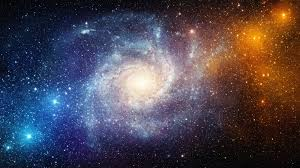
The story of the universe is a testament to the power of human curiosity and ingenuity. In a mere century, we have moved from a place of almost complete ignorance to a stunningly detailed understanding of our cosmic origins and evolution. Yet, with every answer we find, new, deeper questions emerge. What came before the Big Bang? What, truly, is dark matter? And what is the nature of the dark energy that will determine our ultimate fate?
These are not just scientific questions; they are the fundamental queries that define our existence. Cosmology teaches us a sense of both humility and grandeur. We are a small part of a vast, complex, and beautiful universe. Our brief existence is a cosmic miracle, and our quest to understand cosmology is a testament to the enduring human spirit. The grand narrative of the cosmos is still being written, and with every discovery, we move one step closer to understanding our place in the ultimate story of everything.
visit sitehttps://www.instagram.com/
Related Posts



The ethical implication of AI in healthcare
ai in healthcare": The Algorithmic Oath: Ethics and Responsibility in…