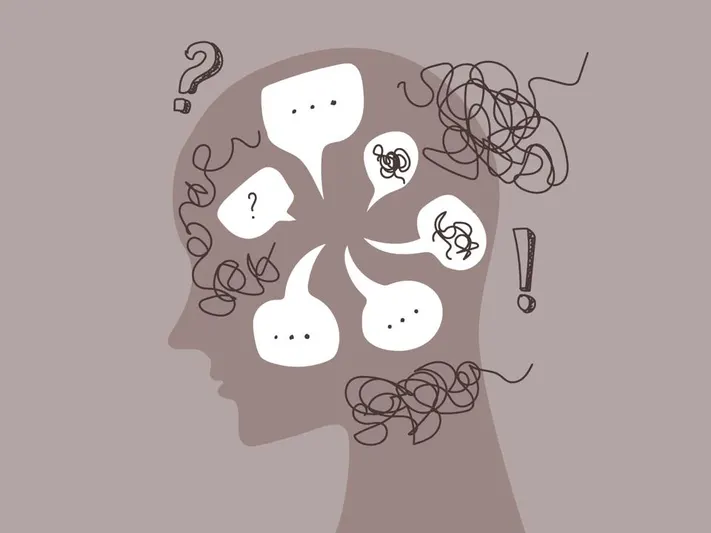
Rationalism: The Power of Reason in Understanding the World
Rationalism-
Introduction
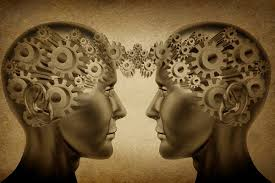
it is one of the most influential philosophical movements in human history. Rooted in the belief that reason—our innate ability to think, analyze, and deduce—serves as the primary source of knowledge, it stands as a cornerstone of Western thought. From the mathematical proofs of ancient Greece to the scientific revolutions of the Enlightenment, it has shaped the way humans perceive truth, knowledge, and reality.
In an age dominated by data, algorithms, and evidence-based decision-making, it continues to inform our intellectual pursuits, moral reasoning, and even our understanding of consciousness. But what exactly is rationalism? How did it develop, and why does it remain so important in our time?
In this article, we’ll explore the origins, key thinkers, central ideas, criticisms, and modern implications of it. By the end, you’ll see that it is more than a historical philosophy—it’s a living, breathing force that continues to define how we make sense of the world.
1. What Is Rationalism?
At its core, it is the philosophical view that reason—rather than sensory experience—is the chief source and test of knowledge. Rationalists argue that some truths are known a priori, meaning they can be grasped independently of experience.
For example, consider the statement “2 + 2 = 4.” You don’t need to physically count apples or stones to know this is true; it’s a self-evident logical truth that arises from the very structure of reason itself.
This contrasts sharply with empiricism, which claims that all knowledge originates from sensory experience. While empiricists like John Locke and David Hume emphasized observation and experimentation, rationalists such as René Descartes, Baruch Spinoza, and Gottfried Wilhelm Leibniz argued that the mind possesses innate ideas—concepts and principles that exist prior to experience.
In short:
- Rationalism: Knowledge comes primarily from reason.
- Empiricism: Knowledge comes primarily from experience.
2. Historical Roots of Rationalism
Ancient Rationalism: From Plato to the Stoics
The roots of it can be traced back to ancient Greece, particularly to Plato (427–347 BCE). Plato proposed that true knowledge—episteme—comes not from the shifting world of sensory experience but from the eternal world of forms or ideas. When we recognize a circle, Plato argued, we are recalling an ideal form of circularity that our souls knew before birth.
Plato’s student Aristotle, while more empirical, also valued reason as the supreme faculty of the human mind. For him, logic and deductive reasoning were essential tools for reaching truth. Later philosophical schools, such as the Stoics, continued to emphasize the rational order of the cosmos and the human capacity to align thought with nature’s reason (the logos).
Medieval Rationalism: Reason and Faith
During the Middle Ages, it found expression in Scholasticism, a movement that sought to reconcile faith with reason. Thinkers like Thomas Aquinas argued that reason and revelation were harmonious pathways to truth. Aquinas famously held that while certain truths (like God’s existence) could be demonstrated by reason, others (like the Trinity) required faith.
Medieval rationalism thus served as a bridge between classical philosophy and modern thought, laying the groundwork for the scientific and philosophical revolutions that would follow.
3. The Rise of Modern Rationalism
The 17th and 18th centuries marked the golden age of rationalism. This period, often called the Age of Reason or the Enlightenment, saw thinkers use logic, mathematics, and systematic doubt to challenge authority and build new systems of knowledge.
René Descartes (1596–1650): The Father of Modern Rationalism
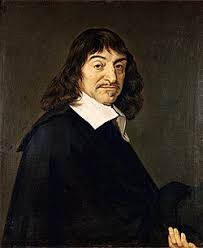
René Descartes is often hailed as the father of modern philosophy. His famous declaration—“Cogito, ergo sum” (“I think, therefore I am”)—encapsulates the rationalist spirit.
Descartes began by doubting everything: the senses, the external world, even his own body. But one thing he could not doubt was the existence of the doubting subject itself—the thinking mind. From this indubitable truth, he sought to reconstruct all knowledge on the firm foundation of reason.
He also believed that certain ideas, such as the concept of God or mathematical truths, are innate—they exist in the mind independently of experience.
Baruch Spinoza (1632–1677): Reason as Freedom
Baruch Spinoza took rationalism in a deeply ethical direction. For Spinoza, God and nature were one and the same—a single, infinite substance governed by reason. Human freedom, he argued, lies not in escaping the laws of nature but in understanding them rationally.
His work Ethics is a masterpiece of logical structure, written in geometric form, reflecting his belief that truth can be deduced with mathematical precision. To Spinoza, living rationally means aligning oneself with the rational order of the universe.
Gottfried Wilhelm Leibniz (1646–1716): The Rational Universe
Leibniz, a mathematician and philosopher, introduced the idea of monads—simple, indivisible units of reality that reflect the universe from their own perspectives. His famous assertion that we live in “the best of all possible worlds” stems from his belief that a rational God created a world governed by logical necessity.
Leibniz also proposed the Principle of Sufficient Reason—the idea that nothing happens without a rational explanation. This principle remains a cornerstone of both philosophy and science.
4. Rationalism vs. Empiricism: A Productive Tension
The debate between rationalism and empiricism defined much of early modern philosophy.
- Empiricists like John Locke, George Berkeley, and David Hume argued that the mind is a tabula rasa—a blank slate upon which experience writes.
- Rationalists, by contrast, claimed that certain truths (like mathematics or moral principles) are accessible through pure thought.
This tension came to a head in the work of Immanuel Kant (1724–1804), who sought to synthesize the two traditions. Kant agreed with the empiricists that all knowledge begins with experience—but not that it all arises from experience. The mind, he argued, imposes a priori categories (such as space, time, and causality) on the raw data of sensation.
Kant’s “Copernican Revolution” in philosophy thus integrated rationalism and empiricism, setting the stage for modern epistemology.
5. Rationalism and the Scientific Revolution
The scientific revolution of the 16th and 17th centuries was deeply influenced by rationalist thinking. Mathematicians and scientists such as Galileo, Kepler, Descartes, and Newton believed that the universe operated according to rational, discoverable laws.
- Mathematics became the language of nature.
- Deductive reasoning allowed scientists to derive complex truths from simple principles.
- Systematic doubt and logical inquiry replaced dogma and superstition.
Even though empirical methods (experimentation and observation) were crucial, the underlying belief in a rationally ordered universe was distinctly rationalist. The assumption that the cosmos is intelligible—that it makes sense—is a fundamentally rationalist conviction.
6. Rationalism in Ethics and Politics
Rationalism is not limited to science or epistemology—it also profoundly shaped moral and political thought.
Ethical Rationalism
Rationalist ethics holds that moral principles can be discovered through reason alone. Spinoza and Leibniz believed that understanding the rational structure of the world leads to virtue. Later thinkers, like Immanuel Kant, developed deontological ethics, arguing that moral laws are grounded in rational duty rather than emotional inclination.
Kant’s Categorical Imperative—“Act only according to that maxim whereby you can at the same time will that it should become a universal law”—is a quintessential expression of moral rationalism.
Political Rationalism
Rationalism also inspired Enlightenment political philosophy. Thinkers like Jean-Jacques Rousseau, Thomas Hobbes, and John Locke (though empirically inclined) all used reason to imagine rational foundations for society, government, and law.
The Declaration of the Rights of Man and of the Citizen (1789) and the U.S. Constitution reflect the rationalist ideal that human affairs can be organized according to universal principles of justice and equality.
7. Criticisms of Rationalism
No philosophical movement is without its critics, and rationalism has faced significant challenges over the centuries.
The Empiricist Challenge
Empiricists have long argued that rationalism overestimates the mind’s powers. Without sensory input, they say, reason has nothing to work on. Locke compared the mind to a blank slate precisely to reject the notion of innate ideas.
David Hume took this further, arguing that reason itself is often “the slave of the passions.” For Hume, our beliefs about causality, morality, or the self are not derived from pure reason but from habits of thought and feeling.
The Romantic Reaction
In the 19th century, the Romantic movement rebelled against the cold logic of rationalism. Artists and philosophers like Friedrich Schiller, Johann Gottfried Herder, and Søren Kierkegaard emphasized emotion, individuality, and existential experience over abstract reasoning.
Kierkegaard, often called the father of existentialism, warned that pure rationality could never grasp the subjective truth of human existence—such as faith, love, and despair.
The Postmodern Critique
In the 20th century, postmodern thinkers such as Michel Foucault and Jacques Derrida questioned the Enlightenment’s faith in universal reason. They argued that what we call “rationality” is often shaped by historical, cultural, and linguistic contexts.
To them, rationalism could serve as a tool of domination—defining what counts as “truth” while marginalizing other ways of knowing.
8. Rationalism in the Modern World
Despite criticism, rationalism remains deeply embedded in modern life. From science and technology to education and governance, the rationalist ethos continues to guide human progress.
Science and Technology
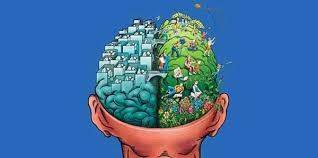
Modern science operates on rationalist principles: the belief in logical consistency, mathematical modeling, and universal laws. Artificial intelligence, quantum physics, and even neuroscience rely on the assumption that reality is structured in a way that can be rationally understood.
Rationalism in Everyday Life
Rationalism isn’t just for philosophers and scientists—it’s a way of thinking that affects everyday decision-making. When we weigh evidence before making a choice, when we seek logical consistency in our beliefs, or when we question dogma, we are practicing rationalism.
Education and Critical Thinking
Modern education systems emphasize critical thinking, logical reasoning, and evidence-based learning—all products of the rationalist tradition. Encouraging students to think for themselves and question assumptions is perhaps rationalism’s greatest gift to humanity.
9. Rationalism in the Digital Age
In the 21st century, rationalism faces both unprecedented opportunities and new challenges.
The Rise of Data Rationalism
Big data, machine learning, and AI represent a new frontier of rationalism—where human reason is extended by computational logic. Algorithms now process vast amounts of information, making decisions that once required human judgment. This reflects a deep rationalist faith: that complex phenomena can be reduced to patterns, models, and rules.
The Paradox of Information Overload
However, our age also reveals the limits of rationalism. In a world flooded with data, more information doesn’t always mean more understanding. Rationalism’s ideal of clear, objective knowledge can be undermined by misinformation, bias, and emotional manipulation—especially online.
Ethical Rationalism Revisited
As AI systems make moral decisions—from autonomous vehicles to predictive policing—the question of machine rationality becomes pressing. Can moral reasoning be fully reduced to logic? Or is there something about human empathy and intuition that lies beyond rational computation?
10. The Future of Rationalism
Rationalism continues to evolve. New fields like cognitive science, neuroscience, and philosophy of mind are reshaping our understanding of how reason operates. Rationalism today is less about rejecting emotion or experience and more about integrating them into a comprehensive model of human cognition.
Rationality and Emotion
Recent research suggests that emotion and reason are not opposites but partners in decision-making. Neuroscientists like Antonio Damasio have shown that without emotional input, rational decision-making can actually collapse. Modern rationalism thus recognizes the importance of feeling in guiding thought.
Rationalism and AI Ethics
As we delegate reasoning to machines, we must revisit rationalism’s ethical foundations. What does it mean to reason morally? Can AI systems be truly rational if they lack consciousness or intention? These questions echo Descartes’ own inquiries into the nature of mind and reason—but in a futuristic context.
Conclusion: Rationalism as a Living Legacy

Rationalism, at its heart, is the faith that the world makes sense—and that human beings, through the power of reason, can understand it. From the dialogues of Plato to the equations of Leibniz, from Descartes’ Cogito to Kant’s Critique, rationalism has shaped our search for truth, order, and meaning.
While it has faced challenges—from empiricism, romanticism, and postmodernism—it remains an indispensable tool for navigating the complexities of existence. Rationalism teaches us to doubt, to question, to seek coherence, and to believe that reason can illuminate even the darkest corners of ignorance.
In an era of misinformation, polarized discourse, and emotional manipulation, rationalism is not merely an abstract philosophy—it is a moral imperative. To think clearly, to reason honestly, and to act justly on the basis of that reasoning is perhaps the highest expression of human dignity.
As the 21st century unfolds, rationalism will continue to guide our quest for understanding—reminding us that while emotions move us and experiences shape us, it is reason that ultimately allows us to make sense of it all.
visit sitehttps://www.instagram.com/
Related Posts


Top 10 Superfood for a healthy lifestyle in 2025
superfood Superfood for a Healthy Lifestyle in 2025 Introduction Eating…