
Nihilism: The Void, The Freedom, The Unavoidable Question
nihilism-
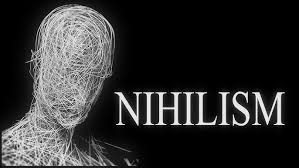
In the vast and often cacophonous marketplace of ideas, few concepts provoke as visceral a reaction as nihilism. It’s a word whispered in hushed tones, a label flung like an accusation, and a philosophical stance that, to many, seems to signify the ultimate surrender. Nihilism, at its core, is the belief that life is without objective meaning, purpose, or intrinsic value. It posits that moral values are baseless, knowledge is ultimately futile, and existence itself is a meaningless accident in a cold, indifferent universe.
To stare into the abyss of nihilism is to confront the terrifying possibility that our most cherished beliefs, our grandest ambitions, and our deepest loves are all, in the grand scheme of things, utterly insignificant.
Yet, to dismiss nihilism as mere despair is to misunderstand its profound and multifaceted nature. It is not simply the absence of belief; it is a radical questioning of everything we take for granted. It is the void that emerges when the old gods have died, when the grand narratives of religion, tradition, and progress have crumbled under the weight of modern scrutiny.
In this exploration, we will journey into the heart of nihilism, examining its historical roots, its various forms, and the ways in which it has shaped our modern consciousness. We will confront the fear it inspires, the freedom it offers, and the unavoidable question it poses to each of us: how do we live in a world without inherent meaning?
The Historical Echoes of Nothingness
While the term “nihilism” was popularized in the 19th century, its philosophical roots stretch back much further. The ancient Greek Sophists, with their radical skepticism and their famous assertion that “man is the measure of all things,” sowed the first seeds of this idea. They questioned the existence of objective truth and the validity of moral laws, arguing that what we call “good” or “just” are merely social constructs.
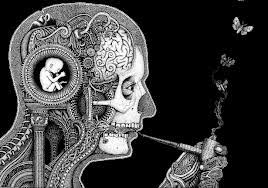
This early form of nihilism was less about despair and more about a liberation from the rigid dogmas of the past, paving the way for a more human-centered ethics. Centuries later, the rise of scientific inquiry and the Enlightenment further chipped away at the foundations of a divinely ordered universe.
As science explained the mechanics of the cosmos without the need for a celestial clockmaker, the role of God, and the purpose He was said to have bestowed upon humanity, began to wane. This intellectual shift created a vacuum, a space where the old certainties no longer held sway. It was this historical moment that gave birth to what we now recognize as modern nihilism.
The 19th century was a pivotal period for the concept. The Russian novelist Ivan Turgenev, in his masterpiece Fathers and Sons, introduced the character of Bazarov, a cold, rational, and unfeeling medical student who proudly declared himself a nihilist. Bazarov’s nihilism was not a passive resignation but an active rejection of all authority, all tradition, and all sentimentality.
He saw the world in purely material terms, dismissing art, love, and poetry as useless bourgeois distractions. This portrayal, while perhaps a caricature, captured the revolutionary and destructive potential that many saw in nihilism—the fear that it could lead to a society without values, without empathy, and without a moral compass.
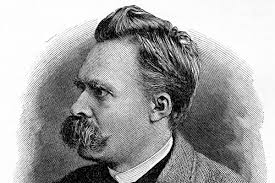
However, it was the German philosopher Friedrich Nietzsche who gave nihilism its most profound and lasting treatment. For Nietzsche, nihilism was not an external threat but an internal crisis, the inevitable outcome of a long historical process.
His famous declaration, “God is dead. God remains dead. And we have killed him,” was not a celebration but a sober and terrifying diagnosis of the modern condition. Nietzsche foresaw that the collapse of Christian belief would lead to a moral vacuum, a time when humanity would have to grapple with the realization that there is no cosmic purpose, no divine plan, and no objective foundation for our values.
He saw nihilism as a profound and dangerous sickness, but also as an opportunity for humanity to transcend itself, to become the creator of its own values, to become, in his words, the Übermensch, or “Overman.”
The Many Faces of Nihilism
Nihilism is not a monolithic concept. It can be broken down into several distinct but often overlapping forms:
Existential Nihilism: This is the most common form of nihilism. It is the belief that life is without objective meaning, purpose, or intrinsic value. It confronts the sheer contingency of our existence—that we are a random byproduct of cosmic processes on a small, insignificant planet.
The existential nihilist sees the universe as an indifferent void, and all of our hopes, dreams, and struggles as ultimately meaningless in the face of eternity. This form of nihilism often leads to feelings of anomie, alienation, and despair.
Moral Nihilism: This form of nihilism asserts that there are no objective moral truths. The moral nihilist believes that concepts like “good” and “evil” are not inherent properties of the universe but are merely human inventions, social conventions that serve a specific purpose at a specific time.
This position can lead to a radical relativism, where no moral system is inherently better than another, or to amoralism, where one acts without regard for any moral principles whatsoever.
Epistemological Nihilism: This is a more radical and less common form of nihilism that questions the very possibility of knowledge. The epistemological nihilist argues that all knowledge is ultimately a fiction, that our sensory perceptions are unreliable, and that we can never truly know anything about the world outside of our own minds.
This position can be seen as an extreme form of skepticism, where even the most basic truths are called into question.
Metaphysical Nihilism: This is the most extreme form of nihilism, which posits that a world without value or purpose is not only a possibility but a reality. The metaphysical nihilist believes that nothing truly exists, or that if it does, it is fundamentally without any substance or meaning.
This form of nihilism is often seen as a logical extension of other forms, as if the absence of meaning leads to the conclusion that reality itself is an illusion.
The Despair and The Freedom
To grapple with nihilism is to confront a profound sense of loss. It is the loss of a cosmic anchor, a divine script that told us who we were and what our purpose was. It is the loss of a reassuring moral framework that separated right from wrong and gave us a sense of security.
This loss can lead to what Albert Camus called “the absurd”—the clash between our human desire for meaning and the universe’s silent indifference. The absurd hero, like Sisyphus, is condemned to a meaningless task, but finds meaning in the rebellion against the meaninglessness itself.
However, to see nihilism as only a source of despair is to miss its liberating potential. If there is no inherent meaning, then we are not bound by any pre-ordained destiny or cosmic purpose. We are free.
The absence of a divine law means that we are the sole creators of our own values, the authors of our own lives. This freedom, while terrifying, is also the ultimate wellspring of creativity and responsibility. We are no longer living out a script written by someone else; we are writing our own.
This is the freedom that allows for radical self-creation. The artist, the scientist, the philosopher—all are engaged in a project of creating meaning in a meaningless universe. Love, friendship, and art become not means to an end but ends in themselves, acts of defiance against the void.
The nihilist is not someone who gives up on life but someone who, having stripped away all comforting illusions, chooses to live all the more passionately, all the more authentically.
Nihilism and the Modern World
Nihilism is not just a dusty philosophical concept; it is a lived reality for many in the 21st century. The rise of secularism, the globalization of cultures, and the relentless march of technology have all contributed to a sense of disorientation and a questioning of traditional values.
We are more connected than ever before, yet we often feel more isolated and adrift. The old stories that once gave us a sense of belonging have lost their power, leaving us to piece together a sense of self from the fragmented narratives of consumerism, celebrity, and social media.
The so-called “culture wars” are, in many ways, a symptom of this nihilistic crisis. They are a desperate struggle for a shared set of values in a world where everyone is a law unto themselves. The political polarization, the rise of cynicism, and the widespread feeling of powerlessness all point to a society that is struggling to find a common ground when the ground itself has been revealed to be a fragile and shifting illusion.
Conclusion: The Unavoidable Question
Nihilism is not an ideology to be embraced or a belief system to be adopted. It is a fundamental truth, a perspective that is always there, waiting in the wings. It is the shadow that follows us when we question the purpose of our work, the meaning of our relationships, or the value of our own lives.
The great temptation is to pretend it doesn’t exist, to fill the void with distractions, with fleeting pleasures, or with dogmatic certainties.
But to confront the void is the first step toward genuine freedom. It is the first step toward living a life that is not merely an imitation of a life, but one that is self-chosen and self-authored. The question is not how to defeat nihilism, but how to live with it. How to build a life of purpose, even when we know that purpose is a human creation.
How to love and to create and to find joy, even when we know that all of it is ultimately a cosmic accident. The answer, perhaps, is not a grand philosophical treatise but a simple act of defiance.
It is to choose to live. To embrace the absurdity of it all and to laugh. To build a cathedral of meaning in a world that offers none. To love another person, not because it serves a divine purpose, but because their existence brings joy to your own.
In the face of the void, we are not helpless victims. We are the creators of our own light, the authors of our own stories, and the defiant heroes of a world that, in its silent indifference, gives us the ultimate gift: the freedom to be.
visit sitehttps://www.instagram.com/
Related Posts


