Masala dosa: A 3000-Word Journey into the Soul of The Golden Circle

The morning air in a South Indian city carries a symphony of sounds and aromas. Among them, one stands out: the rhythmic sizzle of thin batter hitting a hot griddle, followed by the crisp crackle of a golden-brown crepe as it is expertly folded. This is the sound of Masala Dosa being born—a dish that is not merely food, but a multi-sensory experience, a masterpiece of texture, flavor, and culinary history.
With its iconic golden color, a perfectly crisp exterior that shatters on impact, and a soft, savory potato filling nestled within, the Masala Dosa is an engineering feat of both taste and structure. It is a symbol of home, a testament to the richness of India’s vegetarian cuisine, and a cultural icon that has transcended its regional roots to become a global favorite.
This blog is a tribute to that legacy. We will journey back in time to the ancient origins of this beloved dish, explore its profound cultural and philosophical significance, and unveil the secrets behind its perfect creation, from the science of its fermented batter to the art of its accompaniments.
Part 1: The Golden Circle – Origin and History
To understand Masala Dosa, one must first understand its two distinct parts: the dosa itself and the masala (the spiced potato filling). While the two are now inseparable in the minds of millions, their histories are distinct, a story of evolution and ingenious culinary innovation.
The Ancient Origins of the Dosa
The dosa is one of the oldest known dishes in India, with its origins tracing back over a thousand years. Its first mentions can be found in ancient Tamil literature from the 6th century A.D. and in Kannada literature from the 10th century. The dosa of that era was likely a simpler, thicker version, a fermented rice pancake that was a staple of the South Indian diet. The core principle—a batter made from soaked and ground rice and black gram lentils (urad dal)—was already well-established.
The masala dosa was a product of the region’s agricultural bounty. Rice, the staple grain, and urad dal, a protein-rich lentil, were combined to create a wholesome, easily digestible, and delicious meal. Fermentation, a natural process that adds a tangy depth of flavor and improves digestibility, was a cornerstone of the cooking method, a testament to the ancient culinary wisdom of the region.
The Udupi Connection: The Masala Revolution
While the dosa existed for centuries, the modern Masala Dosa as we know it today, with its crispy texture and spiced potato filling, is a more recent invention, credited to the Udupi region of Karnataka. Udupi is a city of spiritual and culinary significance, famous for its Krishna temple and its distinct vegetarian temple cuisine. The Udupi Brahmins, who presided over the temple kitchens, created a highly refined and innovative vegetarian tradition.
In the mid-20th century, a brilliant culinary innovation took place in the Udupi Hotels that were beginning to spread across South India. The simple, plain dosa, a breakfast staple, was combined with a savory, spiced potato filling—the masala. This was a stroke of genius. The potato filling transformed the dosa from a simple breakfast item into a substantial, filling, and incredibly satisfying meal. The dosa itself was also refined, made thinner and larger, cooked on a hot griddle to a perfect, crisp golden-brown.
The Udupi chefs and restaurateurs became the global ambassadors of this new, perfected dish. As they migrated to cities like Mumbai, Delhi, and eventually abroad to London and New York, they carried the recipe with them. The “Udupi Hotel” became a brand synonymous with authentic, delicious, and affordable South Indian vegetarian food, and the Masala Dosa became its most famous export.
Part 2: The Perfect Trinity – Cultural Significance and Philosophy
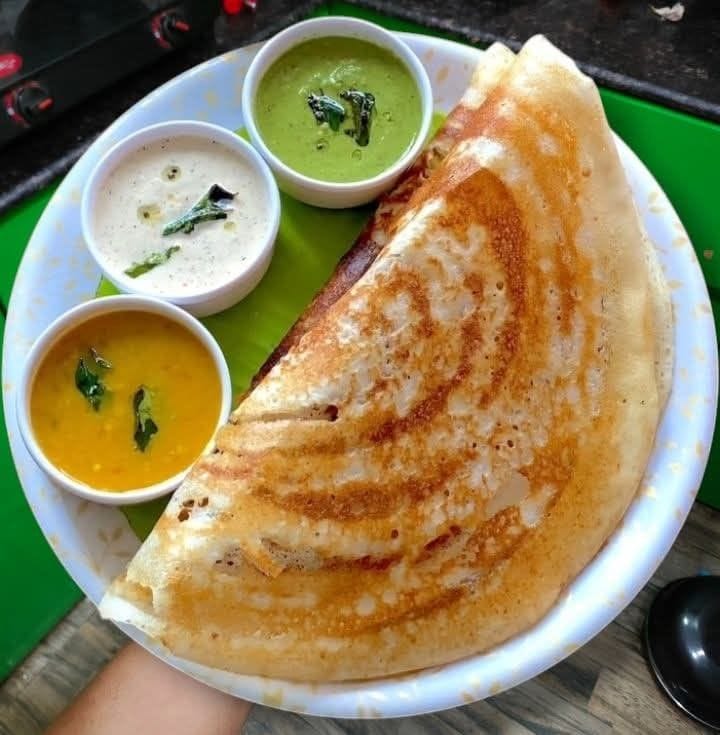
Masala Dosa is a cultural icon for many reasons. It is more than just a dish; it is a full, sensory experience that is deeply ingrained in the lives of millions. The essence of the Masala Dosa lies in its perfect trinity of components: the crispy dosa, the savory masala, and the essential accompaniments of sambar and chutney. Each element is a star in its own right, but it is their combination that creates a culinary masterpiece.
A Breakfast King and the Ultimate Comfort Food
In South India and increasingly across the country, Masala Dosa is the undisputed king of breakfast. It is a wholesome, delicious, and energizing way to start the day. But its appeal goes far beyond the morning meal. It is a go-to for a quick lunch, a satisfying evening snack, or a late-night craving. It is a food that a homesick Indian living abroad dreams of, a comfort food that takes you back to a simpler time and place.
The Science of Fermentation: The Soul of the Dosa
The soul of the masala dosa is its batter, and the soul of the batter is fermentation. This is not just a cooking step; it is a precise, scientific process that gives the dosa its characteristic tangy flavor, its light, airy texture, and its easy digestibility.
The batter is made from a specific ratio of soaked rice and urad dal, which are then ground into a smooth paste. This paste is left in a warm place to ferment overnight. During this time, the natural yeast and bacteria present in the air begin to work their magic. The carbohydrates in the rice are converted into lactic acid, which gives the batter its sour flavor. The fermentation also produces carbon dioxide gas, which creates small bubbles, giving the dosa its light, airy texture. A perfectly fermented batter is the key to a perfectly crispy dosa.

A Symphony of Textures
The Masala Dosa is a study in contrasting textures and flavors.
- The Crispness: The outer shell of the dosa is thin, light, and shatteringly crisp, with a subtle nutty flavor from the toasted rice.
- The Softness: The potato masala filling is the perfect counterpoint—soft, savory, and warm, with a complex flavor profile of turmeric, mustard seeds, and asafoetida.
- The Tang and Spice: The accompaniments, Sambar and a variety of chutneys, complete the experience. The sambar, a tangy lentil and vegetable stew, provides a warm, spicy, and tangy contrast. The chutneys—often a creamy coconut chutney and a fiery red chili chutney—add layers of flavor, allowing the diner to customize each bite.
This interplay of textures and flavors is what makes the Masala Dosa so compelling. It’s a culinary experience that engages all the senses, a testament to the fact that some of the greatest food is found not in complexity, but in the perfect balance of simple elements.
Part 3: A Recipe for Perfection – The Art of Making Masala Dosa
Making Masala Dosa at home is an act of patience and precision. While it may seem daunting, with the right technique and attention to detail, you can recreate this iconic dish. The secret lies in a multi-step process, with each step being crucial for the final result.
Part 1: The Masala Dosa Batter (The Foundation)
This is the most critical step. A good batter is the foundation of a good dosa.
- Ingredients:
- 3 cups raw rice (Idli rice or a long-grain variety)
- 1 cup urad dal (split black gram lentils)
- 1/4 tsp fenugreek seeds (optional, but recommended for fermentation)
- Salt to taste
- Method:
- Soak: Wash the rice and urad dal separately until the water runs clear. Soak the rice and dal with the fenugreek seeds in separate bowls for at least 4-6 hours, or overnight.
- Grind: Drain the water. First, grind the urad dal and fenugreek seeds in a wet grinder or a powerful blender, adding a little water at a time until you get a very smooth, fluffy, and light paste. This can take 15-20 minutes in a blender. Transfer the paste to a large bowl.
- Grind Rice: Next, grind the soaked rice, adding a little water at a time until you have a smooth batter, but with a slightly grainy texture. Do not over-grind it.
- Mix & Ferment: Combine the rice batter and urad dal batter in the large bowl. Mix well with your hands. Add salt and mix. Cover the bowl and let it ferment in a warm place for 8-12 hours, or until the batter has doubled in size and has a slightly sour smell.
Part 2: The Potato Masala (The Heart)
This is the savory, spiced filling that makes the dosa a complete meal.
- Ingredients:
- 3-4 medium potatoes, boiled and mashed
- 1 tbsp oil
- 1 tsp mustard seeds
- 1/2 tsp urad dal (lentil)
- 1/2 tsp chana dal (split Bengal gram)
- A pinch of asafoetida (hing)
- 1 large onion, thinly sliced
- 2 green chilies, slit
- 1-inch piece of ginger, grated
- A few curry leaves
- 1/2 tsp turmeric powder
- Salt to taste
- Fresh coriander leaves for garnish
- Method:
- Heat oil in a pan. Add mustard seeds, urad dal, and chana dal. Sauté until the mustard seeds splutter and the lentils turn golden.
- Add asafoetida, sliced onion, green chilies, and ginger. Sauté until the onion is soft and translucent.
- Add the turmeric powder and curry leaves. Sauté for a few seconds.
- Add the mashed potatoes and salt. Mix everything well, mashing the potatoes further to get a smooth consistency. Garnish with fresh coriander.
Part 3: The Accompaniments (The Holy Trinity)
While you can buy pre-made sambar and chutney, nothing beats the fresh taste of homemade.
- Coconut Chutney: Blend 1 cup grated coconut, 1-2 green chilies, a small piece of ginger, a few sprigs of fresh coriander, salt, and a tablespoon of roasted gram (dalia). Add a little water to get a smooth, thick consistency.
- Sambar: A tangy lentil stew with vegetables like drumsticks, carrots, and onions, flavored with tamarind, sambar powder, and jaggery.

Conclusion: A Legacy on a Griddle
The Masala Dosa is a culinary icon for a reason. Its history is as rich and complex as its flavor, its science as precise as its texture. It is a testament to the ingenuity of a cuisine that finds its perfection in the perfect balance of a few humble ingredients.
From the ancient dosa of a thousand years ago to the modern Masala Dosa that has conquered the world, this dish is a symbol of resilience, a product of a vibrant culture, and a comforting taste of home. Every crispy bite is a reminder of the craftsmanship that goes into its creation and the centuries of tradition that have made it the masterpiece it is today.

visit sitehttps://www.instagram.com/
Related Posts