
he Invisible Ledger: A 2000-Word Journey Beyond Cryptocurrency
cryptocurrency-
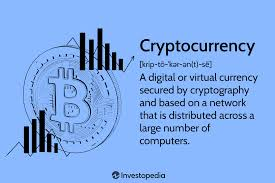
For many, the word “blockchain” conjures images of Bitcoin, volatile.
visit sitehttps://www.instagram.com/
Markets and speculative digital assets have dominated public perception of cryptocurrency. It’s often seen as either a revolutionary financial tool or a risky, environmentally damaging fad. The intense media focus on price volatility has overshadowed the true power of the underlying technology.
This perception is a profound misunderstanding of one of the most transformative inventions of the 21st century. At its core, blockchain is not a currency; it is a technology of trust. It is a decentralized, secure, and immutable ledger with the potential to reshape industries far beyond finance.
From the supply chain of your groceries to the protection of your medical records, blockchain could become the invisible infrastructure of a more transparent and equitable world. It’s a silent revolution, working behind the scenes to solve complex problems.
This blog is a deep dive into that revolution. We will move beyond headlines and explore the core principles that make blockchain powerful, examine its most promising applications, and confront the challenges that stand between its potential and reality.
Part 1: The Engine Room – Understanding the Core Principles
To appreciate blockchain’s power, we must understand its three foundational pillars: decentralization, immutability, and transparency.
Distributed Ledger Technology (DLT)
A traditional spreadsheet or database is controlled by a single entity—a bank, company, or government. This authority can add, change, or delete information, and all participants must trust it.
Now imagine that same spreadsheet copied and distributed across a global network of computers, or “nodes.” Every new record is verified by multiple nodes through a consensus mechanism. Once approved, it is added simultaneously to every copy.
This is the essence of a distributed ledger. No single entity controls the data. The network collectively maintains it. This decentralization removes the need for intermediaries and eliminates single points of failure.
Immutability and Security
Blockchain gets its name from its structure: a chain of blocks containing transactions. Each block carries a cryptographic signature, or hash, and includes the hash of the previous block.
If a hacker attempts to alter an old transaction, the block’s hash changes, breaking every link after it. The network would instantly detect this, making fraud nearly impossible without majority agreement.
Once added, records are permanent, creating a secure, verifiable history.
Transparency
Public blockchains allow participants to view the entire transaction history. While user identities can be pseudonymized or encrypted, the data itself remains open for inspection.
This transparency builds trust. Nothing is hidden, and every action is auditable by the network.
These three principles—decentralization, immutability, and transparency—form blockchain’s foundation. They enable secure, verifiable systems without centralized authority, opening doors to previously impossible applications.
Part 2: The Silent Revolution – Real-World Applications
Cryptocurrencies like Bitcoin were the first use case, but they represent only one application. The true revolution comes from using blockchain to solve real-world problems.
Supply Chain Management
Product journeys are often opaque and vulnerable to fraud. Lack of transparency fuels issues like counterfeiting, food contamination, and unethical sourcing.
Blockchain provides a solution. Every step in a product’s journey can be recorded on an immutable ledger. A coffee brand, for example, can document each stage—from farm to retailer—on the blockchain.
A consumer scanning a QR code could see the bean’s full history: farmer, harvest date, location, and fair-trade certification. This transparency builds trust and enables precise recalls during contamination events.
Healthhttps://blog.gottyou.in/wp-admin/post.php?post=144&action=editcare and Patient Records
Healthcare data is fragmented across hospitals and clinics. This fragmentation leads to errors, delays, and poor coordination, especially for patients seeing multiple specialists.

Blockchain can unify patient data using a secure, decentralized framework. Instead of central servers, records are stored securely off-chain while the blockchain stores encrypted references.
Patients control access using private keys. Doctors and pharmacies can view verified data temporarily when permission is granted. This improves coordination while protecting patient privacy.
Intellectual Property and Royalties
Artists and creators struggle to prove ownership and receive fair compensation. Digital content is easy to copy, and royalty systems are slow and opaque.
Blockchain offers immutable ownership records and automated payments via smart contracts. A musician can register a song on the blockchain, creating a permanent proof of authorship.

When the song is streamed, smart contracts can automatically distribute royalties to everyone involved. Payments become instant, transparent, and fair—without intermediaries.
Identity Management and Digital IDs
Current identity systems rely on scattered documents controlled by governments or corporations. This fragmentation increases the risk of fraud and identity theft.
Blockchain enables self-sovereign identity (SSI), where individuals control their own digital identity. Verifiable credentials—like degrees or government IDs—can be stored securely and validated via blockchain.
Organizations can verify authenticity without accessing the user’s private data. This empowers individuals while reducing fraud and improving privacy.
Part 3: The Power of Code – The Rise of Smart Contracts
While blockchain is the secure ledger, smart contracts are the engine that powers many applications. A smart contract is a self-executing agreement written in code and stored on the blockchain.
Its logic is simple: “If A happens, then execute B.”
In supply chains, a smart contract could release payment to a farmer only if a shipment is delivered and remains at a safe temperature. No banks or lawyers are required. The process is instant, transparent, and automated.
Smart contracts reduce costs, eliminate human error, and remove the need for intermediaries.
Part 4: The Reality Check – Challenges and Limitations
Despite its potential, blockchain is still young. Significant challenges must be addressed before achieving widespread adoption.

Scalability
Many blockchains, like Bitcoin, process only a few transactions per second. This is far below centralized systems like Visa. High-speed applications struggle with these limitations.
New technologies and consensus mechanisms aim to improve scalability, but it remains a major challenge.
Energy Consumption
Proof of Work (PoW) systems require massive computational power and consume significant energy. This environmental impact raises concerns.
However, newer networks are shifting to Proof of Stake (PoS), which reduces energy use by over 99%. This transition is key to sustainable blockchain adoption.
Regulatory and Social Hurdles
Governments are still figuring out how to regulate blockchain. Its decentralized nature challenges existing frameworks, creating uncertainty for businesses and investors.
The technology is also complex, making it difficult for everyday users. Widespread adoption depends on making blockchain as seamless and invisible as the internet protocols we use daily.
Conclusion: The Future of Trust
Blockchain’s story is still unfolding. While media narratives fixate on crypto market volatility, the technology’s lasting impact lies in building a more transparent, secure, and decentralized world.
Its applications span every aspect of life—from farmers verifying produce authenticity, to musicians receiving instant royalties, to patients controlling their medical data.
Blockchain’s future is not about new forms of money. It’s about new forms of trust. It’s about verifiable transactions, self-executing agreements, and true data ownership.
It is a slow, methodical process. But one block at a time, this technology is building a more equitable and transparent future for everyone.
Related Posts


Time management tips for busy professionals in 2025
time management- Time Management Tips for Busy Professionals in 2025…
