

Pavbhaji: A 3000-Word Journey into the Heart of The Sizzle, the Spice, and the Spirit:
In the cacophony of a Mumbai street, amidst the blare of horns and the hurried footsteps of millions, there is a sound that cuts through the noise. It is the rhythmic scrape of a metal spatula against a hot, flat griddle, followed by a theatrical sizzle as a massive slab of butter melts and hisses. Soon, a vibrant red-orange mash of vegetables is spread out, chopped, and mashed with practiced precision. The air fills with an intoxicating aroma of spices, tomato, and ghee—a scent so familiar and comforting that it feels like the very soul of the city has been bottled and released.
This, my friends, is not just a street food; it is an institution. This is pavbhaji.
For a dish that seems so simple—a vegetable mash served with a buttered bread roll—pavbhaji carries a weight of history, a depth of cultural significance, and a flavor profile that is nothing short of an obsession for millions. It is more than just a meal; it is a culinary emblem of Mumbai’s industrious spirit, a symbol of community, and a testament to the fact that the most extraordinary creations often arise from the humblest of beginnings.
This blog is a deep dive into the essence of pavbhaji. We will journey back to its surprising origins in the textile mills of 19th-century Mumbai, explore its rise from necessity to national icon, dissect the art and science of its creation, and ultimately celebrate its enduring status as a dish that captures the heart of India’s most vibrant city.
Part 1: The Birth of a Legend – Pavbhaji’s Origin Story
To truly appreciate pavbhaji, we must travel back in time to the bustling, pre-independence Mumbai of the 1850s and 60s. The city was experiencing an economic boom, driven by the thriving textile industry. Massive mills employed thousands of workers who toiled for long, grueling shifts, often with minimal breaks. These workers, many of them migrants from rural India, needed a meal that was fast, cheap, and hearty enough to sustain them through their demanding shifts.
The traditional Indian thali—with rice, dal, and curry—was impractical. It required multiple pots and utensils and couldn’t be eaten quickly. Vendors near the mills searched for a one-dish solution. Out of that need was born a stroke of culinary genius that would eventually become pavbhaji.
An ingenious vendor began mashing together leftover vegetables and cooking them in a rich, spicy gravy. This bhaji (vegetable curry) was then paired with butter-toasted bread rolls known as pav. The pav had Portuguese roots—the word derives from pão, meaning bread—and had become popular in Mumbai through local bakeries.
The combination was revolutionary. The bhaji could be kept hot on a giant iron griddle (tava), and the pav could be toasted alongside it. It was nutritious, affordable, and fast—a perfect meal for exhausted mill workers.
Soon, pavbhaji spread beyond the mills to the docks, railway stations, and markets. The dish captured Mumbai’s spirit: fast, flavorful, and accessible to everyone. By the time India achieved independence, pavbhaji had already become a beloved part of the city’s culinary identity.

Part 2: The Soul of a City – Pavbhaji’s Cultural Status
Pavbhaji is inextricably woven into Mumbai’s cultural fabric. It is not just food—it’s a story, a shared experience, a ritual. It represents the city’s diversity and inclusivity, where people from all walks of life stand shoulder to shoulder at a street stall, waiting for that perfectly buttered plate.
The Street Food Ritual
Watching pavbhaji being made is as delightful as eating it. The street vendor’s griddle is his stage; his spatula and masher are his instruments. One side of the massive tava holds the simmering bhaji—a thick, bubbling concoction of mashed vegetables and spice—while the other side hosts pav buns being toasted in generous amounts of butter.
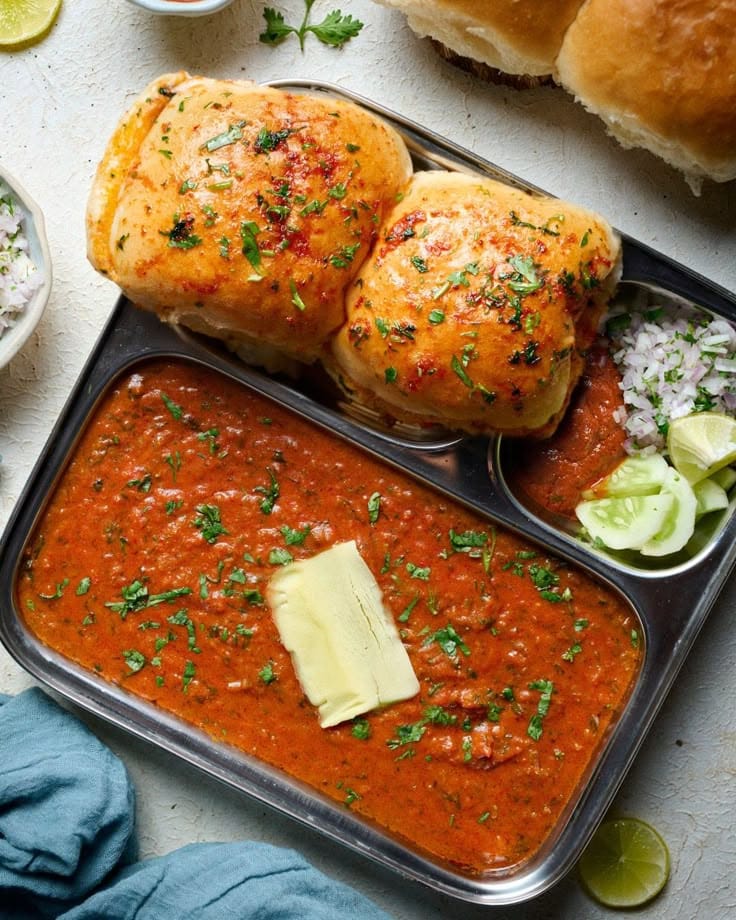
The vendor moves rhythmically, scooping, chopping, mashing, and stirring with theatrical flair. The air crackles with sound and aroma—the hiss of butter, the crunch of the spatula, the fragrance of coriander and chili powder. Each plate of pavbhaji is an act of artistry, served piping hot with a cube of melting butter on top, chopped onions on the side, and a wedge of lemon for zest.
A Dish for Everyone
One of the reasons pavbhaji has remained timeless is its democratic nature. It transcends class, religion, and age. Office workers, students, tourists, and even celebrities can be found gathered around a roadside cart, all sharing in the same humble joy.
From Juhu Beach to Chowpatty, and from high-end restaurants to college canteens, pavbhaji has conquered every corner of India—and beyond. It’s served at weddings, festivals, and even five-star hotels, proving that comfort food can be both street-smart and sophisticated.
It is not merely a dish—it is Mumbai on a plate. Every bite tells a story of resilience, community, and the joy of simple pleasures.
Part 3: A Canvas of Flavor – The Art and Science of the Bhaji
At the heart of pavbhaji lies its bhaji—the spiced vegetable mash that makes the dish iconic. The recipe may seem straightforward, but true mastery lies in the details.
The Perfect Bhaji
The base usually includes potatoes, cauliflower, peas, and carrots—all boiled and mashed. On a hot griddle, the cook adds a generous dollop of butter, finely chopped onions, tomatoes, and green chilies. Then comes the secret weapon: pavbhaji masala.
This signature spice blend combines coriander seeds, cumin, black pepper, fennel, cinnamon, and dried mango powder, creating that unmistakable flavor. As the masala hits the butter, the aroma that fills the air is pure magic. The mashed vegetables are added next, followed by a splash of lemon juice that balances the richness.
The bhaji is continuously mashed and folded until it becomes a smooth, velvety mixture—neither too thick nor too runny. The texture is key; it must cling to the pav without dripping off.
The Golden Ingredient: Butter
If there’s one thing pavbhaji is never shy about, it’s butter. Butter is the heart, soul, and spirit of the dish. It’s melted into the bhaji, brushed onto the pav, and finally crowned on top of the plate before serving.
Each serving glistens with a golden sheen, and that signature richness is what transforms a humble vegetable mash into comfort food royalty. Some even argue that pavbhaji without butter is like Mumbai without monsoon—it just doesn’t feel complete.

Part 4: The Many Faces of Pavbhaji
As pavbhaji traveled across India, it adapted to local tastes and regional preferences. Today, countless variations exist, each with its own twist:
- Cheese Pavbhaji: A creamy delight topped with a generous layer of melted cheese for extra indulgence.
- Jain Pavbhaji: Made without onions, garlic, or potatoes to follow Jain dietary restrictions; often uses bananas or pumpkin instead.
- Khada Pavbhaji: A “chunkier” version where the vegetables are less mashed, giving more texture to each bite.
- Kolhapuri Pavbhaji: A spicier variant from Maharashtra, with fiery red chili and bold flavors.
- Tawa Pulao: A creative offshoot of pavbhaji made with leftover bhaji and rice, cooked on the same griddle.
Each variant proves how versatile and beloved pavbhaji truly is—it can evolve endlessly without losing its essence.
Part 5: Pavbhaji Beyond Mumbai
While pavbhaji was born in Mumbai, it has transcended geographical boundaries. Today, it’s a national favorite served in every major Indian city. From Delhi’s Connaught Place to Chennai’s Marina Beach, every region has embraced it and added its own flair.
Internationally too, pavbhaji has made its mark. Indian restaurants in London, New York, and Dubai proudly feature it on their menus. It’s celebrated by the diaspora as a taste of home—a comforting reminder of Mumbai’s streets and flavors.
The dish’s universal appeal lies in its adaptability. It can be rustic or refined, fiery or mild, street-style or gourmet. Yet, in every version, the spirit of pavbhaji remains intact—a balance of flavor, texture, and nostalgia.
Conclusion: A Legacy on a Griddle
From the industrial heartland of 19th-century Mumbai to the global culinary stage, pavbhaji has traveled a remarkable journey. What began as a quick, hearty meal for textile workers is now a beloved national treasure—a dish that embodies unity, creativity, and comfort.
Pavbhaji stands as a symbol of Mumbai’s resilience and ingenuity. It is fast yet thoughtful, simple yet deeply flavorful. It connects generations and transcends boundaries, reminding us that the most extraordinary creations often come from necessity and love.
The next time you see that fiery red bhaji sizzling on a street vendor’s griddle, pause for a moment. Watch the butter melt, listen to the rhythmic scraping, and breathe in the intoxicating aroma. You are not just witnessing a dish being made—you are witnessing history, heritage, and heart, all cooked together on a single hot tava.
For in that steaming, buttery plate of pavbhaji, you taste not just vegetables and spice, but the story of a city, the soul of its people, and the legacy of India’s most beloved street food., .
visit sitehttps://www.instagram.com/
Related Posts


