
The Power of Philosophy: Understanding the Love of Wisdom
philosophy-

Philosophy is often seen as abstract, ancient, or even irrelevant in a world dominated by technology, business, and fast-paced innovation. Yet, if you trace back every major advancement in science, politics, art, or ethics, you’ll find philosophical questions at the core: What is truth? What is justice? What does it mean to live a good life?
Philosophy, at its heart, is the love of wisdom — the human desire to understand ourselves, the world we live in, and the principles that guide our actions. Far from being an outdated pursuit, it continues to shape how we think, act, and relate to one another.
In this blog, we’ll explore what it is, its major branches, the great thinkers who shaped it, and why philosophical thinking remains essential in the 21st century.
What Is Philosophy?
The word philosophy comes from the Greek philosophia, meaning “love of wisdom.” it asks the fundamental questions that science, politics, and art often build upon. It seeks not only to understand what is, but also why it is — and how we should live in response.
it is not a single discipline but a way of thinking. It’s about questioning assumptions, exploring multiple perspectives, and reasoning critically about existence, morality, and truth.
Where science gives us facts, it helps us interpret them. Where religion offers belief, it encourages understanding. And where politics sets rules, it examines whether those rules are just.
The Origins of Philosophy
it began in ancient civilizations, where curiosity about nature and the human condition led to systematic thinking.
1. Ancient Greece: The Birthplace of Western Philosophy
The story of it often starts in ancient Greece, around the 6th century BCE, with thinkers like Thales, Heraclitus, and Pythagoras. They were among the first to seek natural explanations for the world rather than mythological ones.
Then came Socrates, Plato, and Aristotle, the three pillars of classical philosophy.
- Socrates questioned everything — especially moral assumptions — through dialogue. His method, now known as the Socratic method, aimed to uncover truth through conversation.
- Plato, his student, built on this by creating a comprehensive system of thought that included metaphysics, ethics, and politics. His concept of the Forms — perfect, eternal ideals behind imperfect realities — continues to influence philosophical thought.
- Aristotle, Plato’s student, grounded philosophy in observation and logic. He classified knowledge into categories such as ethics, politics, poetics, and natural science, laying the foundation for Western rationalism.
2. Eastern Philosophy: Wisdom Beyond the West
While Greek thinkers were exploring logic and reason, Eastern philosophy developed rich traditions of its own — equally profound but often more holistic and spiritual.
- Indian philosophy, including Hinduism, Buddhism, and Jainism, explored consciousness, suffering, and liberation (moksha). Texts like the Bhagavad Gita and teachings of the Buddha offered deep insights into the nature of self and reality.
- Chinese philosophy, shaped by Confucius and Laozi, emphasized harmony, morality, and balance. Confucianism focused on ethics and social duty, while Daoism celebrated living in harmony with the Dao — the natural way of the universe.
These traditions show that it is not limited to one culture. The human quest for wisdom is universal.
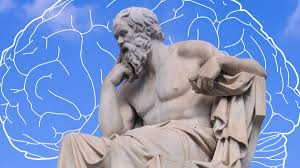
The Major Branches of Philosophy
it covers an enormous range of topics, but traditionally, it’s divided into several main branches:
1. Metaphysics: The Study of Reality
Metaphysics asks: What is the nature of existence? What does it mean for something to be real?
It explores ideas like time, space, causation, and identity. Are we free, or is everything determined? Is there a soul? Is there a God?
From Plato’s world of Forms to Descartes’ dualism and modern debates about consciousness, metaphysics continues to wrestle with what reality truly is.
2. Epistemology: The Study of Knowledge
Epistemology examines how we know what we know. Can we trust our senses? What counts as truth?
René Descartes famously declared, “I think, therefore I am,” grounding knowledge in self-awareness. Later philosophers like David Hume and Immanuel Kant expanded the discussion — questioning whether knowledge comes from experience, reason, or a combination of both.
In today’s digital world, epistemology is more relevant than ever. We face constant questions about misinformation, artificial intelligence, and the limits of human understanding.
3. Ethics: The Study of Morality
Ethics asks: What is right and wrong? How should we act?
From Aristotle’s virtue ethics to Kant’s moral duty and John Stuart Mill’s utilitarianism, philosophers have proposed different ways to determine good action.
Modern ethics explores issues like bioethics, environmental responsibility, animal rights, and the ethics of technology. In a world facing climate change and AI, moral reasoning is more critical than ever.
4. Logic: The Structure of Reasoning
Logic is the foundation of rational thought — the study of how to reason correctly. Aristotle formalized logic in the Organon, but modern symbolic logic, developed in the 19th and 20th centuries, expanded it into a powerful mathematical language.
Logic teaches us how to distinguish sound arguments from fallacies, a skill essential in law, science, and daily life.
5. Aesthetics: The Study of Beauty and Art
Aesthetics explores questions like: What is beauty? What makes art meaningful?
From Plato’s suspicion of art to Kant’s idea of disinterested beauty, aesthetics examines how art influences emotion, perception, and culture.
In the age of digital media, AI-generated art, and globalized culture, philosophical debates about beauty and authenticity continue to evolve.
6. Political Philosophy: The Study of Justice and Power
Political philosophy asks: What is the best form of government? What makes a society just?
Thinkers like Plato, Hobbes, Locke, Rousseau, and Marx each proposed different visions of human freedom, power, and cooperation.
Today, political philosophy underpins debates about democracy, capitalism, human rights, and social justice — proving that the ancient search for justice still defines our world.
The Great Thinkers Who Shaped Philosophy
it’s history is a conversation — a long dialogue between thinkers across time. A few of the most influential voices include:
- Socrates (470–399 BCE) — Father of Western philosophy; taught through questioning.
- Plato (427–347 BCE) — Developed the theory of Forms and founded the Academy.
- Aristotle (384–322 BCE) — Systematized logic and scientific reasoning.
- Confucius (551–479 BCE) — Emphasized ethics, family, and social harmony.
- Laozi (6th century BCE) — Founded Daoism, teaching harmony with nature.
- René Descartes (1596–1650) — Rationalist who emphasized reason over experience.
- David Hume (1711–1776) — Empiricist skeptic who questioned causation and belief.
- Immanuel Kant (1724–1804) — Bridged rationalism and empiricism; defined moral duty.
- Karl Marx (1818–1883) — Critiqued capitalism; proposed a materialist view of history.
- Friedrich Nietzsche (1844–1900) — Challenged morality and celebrated human creativity.
- Simone de Beauvoir (1908–1986) — Pioneered existential feminism, examining freedom and gender.
- Ludwig Wittgenstein (1889–1951) — Explored language and meaning in modern thought.
Each of these philosophers asked radical questions — and their answers continue to influence politics, science, religion, and art today.
Why Philosophy Still Matters Today
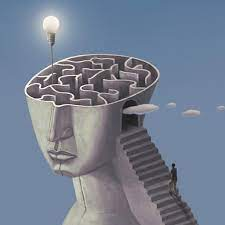
In an age of instant information and artificial intelligence, you might wonder: Why do we still need it?
The truth is, it matters more than ever — because it teaches us how to think, not what to think.
1. Philosophy Develops Critical Thinking
it trains the mind to question assumptions, recognize biases, and evaluate evidence. In a world flooded with misinformation, philosophical reasoning helps us separate truth from noise.
2. Philosophy Builds Ethical Awareness
Technology and globalization bring new moral dilemmas — from data privacy and AI ethics to environmental sustainability. it helps us make informed, principled choices rather than relying on emotion or convenience.
3. Philosophy Encourages Open Dialogue
it thrives on discussion. It reminds us that disagreement can lead to understanding, not division. In a polarized world, the philosophical spirit of respectful debate is desperately needed.
4. Philosophy Connects Science and Humanity
Science explains how things work; it asks why they matter. As neuroscience, genetics, and AI reshape human life, it ensures that progress aligns with wisdom and ethics.
5. Philosophy Inspires Meaning and Purpose
Perhaps most importantly, philosophy helps us navigate life’s biggest questions: What is happiness? What makes life meaningful? How do we face death?
By confronting these questions, we develop resilience, compassion, and clarity — qualities no algorithm can replace.
Philosophy in Everyday Life
You don’t need to read dense texts to be philosophical. it is a daily practice — a mindset of curiosity, reflection, and integrity.
- When you question why you believe something, you’re doing epistemology.
- When you wonder what’s right or wrong, you’re engaging in ethics.
- When you reflect on beauty, love, or mortality, you’re practicing metaphysics.
From deciding how to treat others to considering your role in society, it shapes every choice you make.
Common Misconceptions About Philosophy
Despite its importance, it is often misunderstood. Let’s clear up a few myths:
1. “Philosophy Is Impractical.”

On the contrary, it underpins the most practical fields — law, politics, science, and education. It sharpens reasoning and moral judgment, both essential for leadership and innovation.
2. “Philosophers Just Argue Without Answers.”
While philosophers may not always agree, that’s a strength, not a weakness. it is about exploring possibilities, not enforcing dogma. The goal is understanding, not finality.
3. “Philosophy Is Only for Intellectuals.”
it belongs to everyone. Socrates taught in the marketplace, not in an ivory tower. Every time you ask “why,” you’re engaging in philosophy.
The Future of Philosophy
Far from fading, philosophy is entering a new era. As technology reshapes humanity, philosophical inquiry becomes essential in guiding our choices.
- Artificial Intelligence: Raises questions about consciousness, autonomy, and ethics.
- Biotechnology: Forces us to reconsider what it means to be human.
- Climate Change: Challenges our moral obligations to future generations.
- Globalization: Demands a universal ethics that respects diversity.
Philosophy will continue to evolve alongside science, ensuring that progress remains grounded in wisdom and compassion.
How to Start Exploring Philosophy
If you’re new to philosophy, here’s how to begin:
- Read accessible texts: Start with works like The Philosophy Book (DK), Meditations by Marcus Aurelius, or The Problems of Philosophy by Bertrand Russell.
- Listen and watch: Podcasts like Philosophize This! or YouTube channels such as Wireless Philosophy offer engaging introductions.
- Reflect daily: Keep a journal. Ask questions like “What do I value?” or “What is happiness to me?”
- Discuss with others: Philosophy thrives in conversation. Join study groups or online forums to exchange ideas.
Remember, philosophy is not about memorizing theories — it’s about cultivating a lifelong love of wisdom.
Conclusion: Living Philosophically
Philosophy is more than an academic subject — it’s a way of living with awareness, curiosity, and integrity. It teaches us to question without cynicism, to seek truth without arrogance, and to act with moral courage.
As the philosopher Socrates said, “The unexamined life is not worth living.” Yet the examined life — one guided by reason, empathy, and wonder — is endlessly rich.
In a world full of noise, philosophy invites us to pause, think deeply, and rediscover what it means to be human. It reminds us that wisdom is not found in having all the answers, but in asking better questions.
So, whether you’re reading Plato or scrolling through social media, remember: every moment holds the potential for philosophy — if you have the courage to ask why.
visit sitehttps://www.instagram.com/
Related Posts


