
Transhumanism-
Transhumanism is a philosophical and intellectual movement that advocates for the use of science and technology to enhance human capabilities and overcome what it sees as the fundamental limitations of the human condition. These limitations include aging, disease, and cognitive and physical shortcomings. The core idea is that humanity’s future is not static, and that we can, and should, evolve beyond our current biological form.
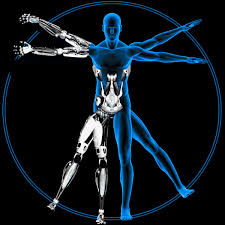
Core Tenets of Transhumanism
- Radical Life Extension: Transhumanists believe that aging is a disease that can be cured. They advocate for research into technologies like genetic engineering, regenerative medicine, and nanotechnology to extend the human lifespan indefinitely.
- Cognitive and Physical Enhancement: This involves improving mental and physical abilities beyond what is naturally possible. Examples include brain-computer interfaces (BCIs) to boost memory and processing speed, and exoskeletons or prosthetics that grant superhuman strength or agility.
- Technological Singularity: A significant aspect of transhumanism is the belief that advancing technology, particularly artificial intelligence, will eventually reach a point of “superintelligence,” leading to a technological singularity. This would be a moment of irreversible change where machine intelligence surpasses human intelligence, potentially accelerating the rate of technological progress exponentially.
- Morphological Freedom: The belief that individuals should have the right to alter their bodies to match their personal desires, whether through cosmetic surgery, cybernetic implants, or other forms of biological modification.
Moral Arguments for Transhumanism
The moral arguments in favor of transhumanism are often rooted in a combination of utilitarianism and a strong emphasis on individual autonomy and progress.
1. The Argument from Beneficence (Doing Good)
This is a utilitarian argument, claiming that we have a moral obligation to enhance human well-being. From this perspective, a transhumanist future would lead to a dramatic reduction in suffering. Ending diseases like cancer and Alzheimer’s, eliminating the pain and decline associated with aging, and eradicating physical disabilities would be an enormous net gain for humanity. Proponents argue that it would be a moral failing to not use the technology at our disposal to alleviate such widespread suffering and improve the quality of life for billions of people. This argument suggests that a world with less suffering is a more ethical world.
2. The Argument from Individual Liberty and Autonomy
A cornerstone of transhumanist thought is the concept of morphological freedom. This is the moral argument that individuals have a right to control their own bodies and minds. Just as people have the right to get tattoos or cosmetic surgery, they should also have the right to choose to enhance their bodies with advanced technology. Restricting access to these technologies would be a violation of personal freedom. This argument also extends to the right to choose one’s own identity and destiny, unconstrained by biological limitations.
3. The Argument from Progress and Human Potential
This argument frames transhumanism as the logical next step in human evolution. Throughout history, humans have used tools to overcome their natural limitations, from building shelters to inventing medicine. Transhumanism is seen as the continuation of this process, pushing humanity toward a greater, more advanced state. It argues that to halt this progress out of fear or tradition would be to betray our nature as problem-solvers and innovators. It envisions a future where humans can reach their full potential, not limited by the “flaws” of their biology.
4. The Argument from Justice and Equality

This argument is more nuanced but suggests that the eventual widespread adoption of these technologies would lead to greater equality. In the long run, by eliminating diseases and disabilities, transhumanism could remove some of the most significant sources of inequality and disadvantage. While there are legitimate concerns about initial disparities in access to these technologies, proponents believe that, over time, a “post-human” state would offer a new form of universal equality, where everyone has access to the same high level of health and capability.
Moral Arguments Against Transhumanism
The moral criticisms of transhumanism are just as profound and are often based on concerns about human nature, social justice, and unintended consequences.
1. The Argument from Human Dignity and Authenticity
Many critics argue that transhumanism threatens the very concept of what it means to be human. By overcoming our biological limitations, we might lose the things that make us unique and authentic. Our vulnerability, our mortality, and our physical imperfections are often seen as sources of meaning, empathy, and resilience. . A human without these challenges might lose their sense of purpose. This argument holds that striving to be perfect is not a true path to flourishing, and that our flaws are an essential part of our identity. The pursuit of “perfection” could lead to a loss of shared humanity.

2. The Argument from Social Justice and Inequality
This is perhaps the most forceful criticism. While proponents see a future of equality, critics warn that transhumanist technologies will initially be available only to the wealthy, creating a new and permanent class division. The “enhanced” elite would have superior health, intelligence, and lifespan, while the “un-enhanced” majority would be left behind. . This could exacerbate existing social and economic inequalities to a degree never before seen, potentially creating a species-level divide between the “haves” and the “have-nots.”
3. The Argument from Unintended Consequences (The “Hubris” Argument)
This argument is a cautionary tale against human arrogance. We cannot fully predict the long-term consequences of fundamentally altering our biology. What are the psychological effects of radical life extension? What happens when we integrate our brains with machines? There could be unforeseen side effects, ecological disasters, or existential risks we are not prepared for. Critics argue that transhumanist projects are a form of “playing God” without fully understanding the rules of the game.
4. The Argument from Psychological Harm
Beyond physical changes, critics worry about the psychological and social impacts. The relentless pursuit of self-improvement could lead to constant anxiety and body dysmorphia on a societal scale. The concept of “good enough” would disappear, as individuals are pressured to continually upgrade their minds and bodies to keep up with the latest enhancements. This could lead to a society of constant striving and dissatisfaction.

Conclusion
The debate over transhumanism is a fundamental one, touching upon the very essence of human nature and our future. The moral arguments for it are compelling, promising an end to suffering and a new era of human flourishing. However, the moral arguments against it are equally powerful, raising profound questions about human dignity, social justice, and the wisdom of pursuing a “perfect” human. As technology continues to advance, these debates will move from the realm of philosophy to the forefront of public policy, forcing society to confront the ethical implications of a post-human future.
visit sitehttps://www.instagram.com/
Related Posts



K Pop culture- global influence
k pop culture K-pop, a portmanteau for Korean popular music,…