Introduction
smartphones-
Smartphones have become more than just gadgets—they are our lifeline. From communication and entertainment to shopping, health monitoring, and even work, these pocket-sized devices have changed the way we live. But as we step into 2025 and beyond, the future of smartphones looks even more exciting.
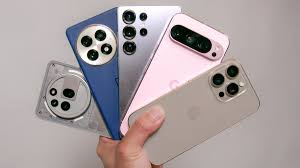
Tech companies like Apple, Samsung, Xiaomi, and Google are competing to introduce revolutionary features that will redefine how we use our devices. In this blog, we’ll explore the upcoming smartphone innovations, trends, and what you can expect in the next five years.
- Foldable and Rollable Phones Will Go Mainstream
Foldable phones are no longer a luxury—they’re becoming a trend. In the next five years:
Rollable displays will allow phones to expand and shrink based on usage.
Durability improvements will make foldables resistant to scratches and repeated folding.
More budget-friendly foldables will be available, making them accessible to everyday users.
These designs will replace the traditional flat smartphone look, offering flexibility for gaming, streaming, and multitasking.
- AI-Powered Smartphones
Artificial Intelligence is already part of phones, but it’s set to go deeper:
AI cameras will adjust lighting, background, and filters automatically for perfect photos.
Smarter voice assistants will handle advanced tasks like booking tickets, writing messages, or summarizing news.
Personalized usage: Your phone will understand your habits and suggest actions even before you think of them.
By 2030, AI-driven smartphones may feel more like personal companions than just gadgets.
- Better Battery Life and Charging
One of the biggest frustrations today is battery drain. In the future:
Graphene batteries will replace lithium-ion, offering faster charging and longer life.
Wireless charging pads and long-distance charging will allow you to charge your phone without plugging it in.
AI-powered battery management will learn your usage patterns and optimize energy automatically.
Imagine charging your phone fully in under 10 minutes—this could be a reality soon.
- Satellite Connectivity
In 2025 and beyond, phones will not rely only on mobile towers.
Satellite phones will become common, allowing communication in remote areas without network coverage.
Emergency services will work even in disaster zones.
This technology will help travelers, climbers, and people in rural areas stay connected anywhere on Earth.
- Augmented Reality (AR) and Virtual Reality (VR) Integration
The line between the physical and digital worlds is fading:
Smartphones will come with AR glasses support for gaming, education, and shopping.
3D hologram calls may replace video calls.
Retailers will use AR apps so customers can “try” clothes, furniture, or makeup before buying.
This will make smartphones central to how we interact with the metaverse.
- Ultra-Secure Phones
With hacking and data theft on the rise, the future of smartphones includes advanced security:
Biometric security will expand to include facial, iris, and even heartbeat recognition.
On-device AI will detect suspicious activity instantly.
Phones may include self-encrypting chips to protect sensitive data.
Your smartphone may soon be as secure as a personal vault.
- Eco-Friendly Smartphones
As the world shifts to sustainability, phone makers will:
Use recycled materials and eco-friendly packaging.
Create modular phones so users can replace parts (battery, camera) without buying a new device.
Develop phones with low energy consumption for reduced environmental impact.
This trend ensures technology evolves responsibly.
- Cameras Beyond Imagination
Smartphone cameras are already powerful, but the future looks stunning:
200+ megapixel sensors for ultra-clear photos.
AI editing tools built into cameras.
Multiple lenses combining wide, ultra-wide, and periscope zoom.
Even 3D scanning cameras to create realistic digital models.
For photography lovers, phones will replace professional cameras.

- Faster and Smarter Processors
By 2030, smartphones will feel more like pocket-sized supercomputers:
Quantum-inspired chips may allow lightning-fast performance.
Phones will handle AR/VR, gaming, and multitasking without lag.
Integration with cloud AI will make phones faster while using less memory.
- The Rise of Phone-Free Interfaces
Interestingly, the next 5 years may also see the beginning of a post-smartphone era:
Wearables (like smartwatches and AR glasses) may take over some tasks.
Voice-based and holographic interactions will reduce dependence on touchscreens.
Smartphones will become just one part of a larger personal tech ecosystem.
Benefits of Future Smartphones
More connectivity: Satellite + 6G networks.
Productivity boost: AI handles routine tasks.
Better entertainment: AR, VR, and immersive experiences.
Eco-conscious tech: More sustainable and recyclable.
Challenges Ahead
Rising costs: New features may make flagship phones very expensive.
E-waste: Even with eco-friendly efforts, discarded phones remain a problem.
Privacy issues: More data means more security risks.
Over-dependence: As phones do more, humans may rely too heavily on them.
Conclusion
The future of smartphones in the next five years promises a blend of innovation, sustainability, and smarter technology. From foldables and AI integration to satellite connectivity and AR features, smartphones will not just be communication tools—they’ll become lifestyle companions.
The only question is: Are we ready to adapt to this rapid change?
FAQs
Q1. Will foldable phones replace normal phones?
Not entirely, but they will become more common as prices drop.
Q2. What is the future of smartphone batteries?
Graphene and AI-powered batteries will charge faster and last longer.
Q3. Will AR replace traditional apps?
AR will enhance, not replace, apps—making them more interactive.
Q4. Are satellite phones going to be expensive?
Initially, yes, but as the technology spreads, prices will fall.
Q5. What’s the biggest smartphone trend of the next 5 years?
AI-driven personalization, foldable designs, and AR/VR integration will dominate.
visit sitehttps://www.instagram.com/
Related Posts

Work-life balance: Achieving success without burnout in 2025
work life balancing- Introduction Introduction In today’s fast-paced, hyper-connected world,…

Cybersecurity challenges and sollution in the AI era
cybersecurity challenges Introduction As AI transforms industries, it also reshapes…